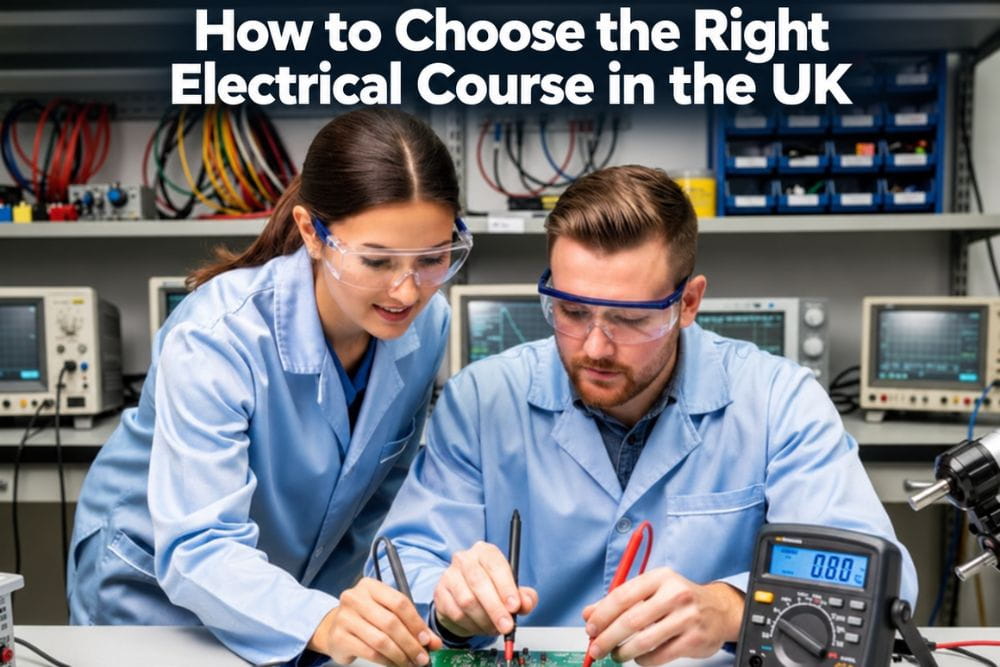
An electrician works with electrical systems that power homes, businesses, and public buildings. The role centres on safe installation, system testing, and fault repair. Electricians install wiring, maintain circuits, diagnose faults, read technical drawings, and follow safety rules such as BS 7671 in the UK.
In 2026, this trade offers strong job security as demand grows across construction and infrastructure work. The role also brings good pay, flexible work patterns, and clear career growth. Work takes place in homes, factories, offices, and rail systems. Daily tasks involve testing circuits and fixing faults. The move to green energy adds new work such as solar systems and EV charging points. Training routes stay affordable, and apprenticeships offer paid experience. These advantages create global job options and place electricians among the most trusted skilled trades.
1. Job security and high demand across the UK
The electrical industry faces a large skills gap across the United Kingdom. Industry reports estimate a need for more than 100,000 additional electricians by 2032. Growth in construction, infrastructure projects, and building upgrades continues to increase demand for skilled workers. Homes, commercial buildings, and public facilities all rely on safe electrical systems and regular maintenance. As experienced workers retire, fewer new professionals enter the trade. This shortage strengthens job stability and creates long-term employment opportunities across many sectors of the UK economy.
2. Strong earning potential
Electricians rank among the higher-paid skilled trades in the UK. A qualified professional often earns between £35,000 and £45,000 per year. According to recent JIB electrician rates, hourly pay for qualified workers sits around £18.82 to £19.54. Approved electricians and London-based roles often exceed £21 per hour. Income rises with experience, advanced certifications, and specialist skills. Completion of an NVQ Level 3 Electrical Installation qualification marks a key step toward full professional status. This training path leads to higher earnings and access to inspection, testing, and system installation roles.
3. Independence and flexible working
Electrical work offers strong independence. Many qualified tradespeople move into self-employment after gaining experience. This route gives greater control over working hours, project selection, and daily workload. A professional electrician selects clients and manages schedules according to personal priorities. Greater responsibility also brings stronger influence over income. Some specialists focus on inspection services, while others concentrate on installation or maintenance work. This flexibility allows individuals to manage their own schedule, build expertise in a preferred area of the trade, and shape their working life around personal goals.
4. Career paths and progression in the electrical trade
Electrical training opens the door to many career directions and long-term advancement.
- Start an electrical contracting business
- Work in renewable energy systems such as solar PV or wind installations
- Train apprentices as a technical instructor
- Move into electrical design or project estimating
- Specialise in EV charging installation
Industry experience also leads to senior positions. Skilled electricians often progress into roles such as site supervisor, project manager, or electrical engineer. The trade evolves alongside new technology, which creates continuous opportunities for career development.
5. Variety in work environments
Work in this trade takes place in many different environments. Professionals install systems in housing developments, commercial offices, factories, and public buildings. Some projects involve historic building renovations, while others focus on modern infrastructure. Technicians also work on railway systems, outdoor power networks, and energy installations. One week might involve wiring a residential property, while another focuses on electrical systems in an industrial facility. This wide range of workplaces prevents routine and keeps daily tasks varied across multiple sectors.
6. Challenging and interesting technical work
Electrical tasks involve technical thinking and practical problem solving. Daily duties include testing circuits, tracing electrical faults, and interpreting wiring diagrams. A circuit refers to the path electricity follows through wires and connected equipment. Fault diagnosis requires careful analysis and logical reasoning. Each project presents a different technical challenge, from installing new distribution boards to repairing damaged wiring systems. This problem-solving aspect keeps the work engaging and intellectually stimulating for people who enjoy practical and hands-on technical tasks.
7. A future-proof career in the green energy transition
The shift toward clean energy is transforming the electrical industry across the United Kingdom. Government net-zero targets drive the adoption of modern electrical systems and low-carbon technologies. Electricians install and maintain solar PV systems, electric vehicle charging points, battery storage units, and energy-efficient power systems. Homes, businesses, and public infrastructure now rely on these upgrades. Skilled professionals therefore play an important role in the transition to sustainable energy. This transformation expands the types of electrical systems installed in modern buildings and creates new areas of specialist work.
8. Affordable training options
Training for the electrical trade often costs far less than a university degree. Many students avoid the high debt associated with traditional higher education. Trade schools and electrical training centres focus on practical learning that reflects real industry conditions. Courses include hands-on instruction with modern tools, testing devices, and installation equipment. Students learn wiring methods, safety procedures, and inspection practices in controlled workshop environments. Some programmes reach completion within months rather than years, which allows trainees to enter the workforce sooner.
9. Paid apprenticeships
An apprenticeship provides structured entry into the electrical profession. A trainee works under the supervision of a qualified electrician on real construction or maintenance projects. This environment supports safe learning while practical skills develop through daily experience. Apprentices study wiring systems, testing procedures, and installation standards as part of their training programme. This stage forms an essential step toward professional certification and industry recognition. Apprentices also receive wages during training, which provides financial support while valuable workplace experience develops.
10. Opportunities to work internationally
Electrical skills remain valuable across many countries. Global demand for skilled tradespeople creates opportunities beyond the UK. Qualified electricians often work on construction, energy, and infrastructure projects worldwide. Many employers recognise training from established certification bodies such as City & Guilds. These qualifications transfer well across international markets. Overseas work also exposes professionals to different technologies, building systems, and electrical standards. This experience expands technical knowledge while opening doors to wider career opportunities.
11. A Respected skilled profession
Electricians play a vital role in modern society. The profession requires technical expertise, careful attention to detail, and strong safety awareness. Skilled professionals protect people and property by installing and maintaining safe electrical systems. Communities rely on this expertise to power homes, hospitals, schools, and transport networks. Infrastructure projects also depend on electricians to maintain a stable energy supply. This responsibility earns strong respect across construction, engineering, and public services. The profession carries trust because it supports essential systems used every day.
What does an electrician do?
Electricians install electrical systems, maintain and test circuits, diagnose faults, and repair damaged components. They read technical drawings and follow safety rules and national wiring standards in the United Kingdom.

Electrical installation
Install wiring, distribution boards, sockets, switches, and lighting systems in new buildings or renovation projects. These components deliver power to lights, outlets, and equipment. Accurate setup keeps circuits stable and prevents electrical faults. Proper installation supports safe electricity flow across the building.
Maintenance and testing
Inspect electrical circuits and equipment during routine checks. Use testing tools such as multimeters to measure voltage and current in a circuit. These tests reveal faults, loose connections, or worn parts. Early detection keeps systems safe and reliable.
Fault diagnosis and repair
Locate electrical problems such as damaged wiring, tripped breakers, or faulty devices. Trace the source of the issue within the circuit. Replace or repair defective components. Correct repairs restore stable and safe electrical operation.
Reading technical drawings
Interpret wiring diagrams and building plans before installation work begins. These drawings show circuit paths, equipment locations, and system layout. Clear interpretation guides correct wiring routes. Accurate planning supports safe and efficient installation.
Safety and regulatory compliance
Follow national wiring regulations such as BS 7671 during installation and inspection work. Carry out safety checks on circuits and equipment. Proper compliance reduces the risk of electrical shock, fire, and system failure. This process protects buildings, equipment, and occupants.
What skills do you need to be an electrician?
To be an electrician, you need strong technical knowledge and practical ability. The trade involves installing wiring systems and reading technical drawings. It also includes testing circuits with tools such as multimeters and diagnosing electrical faults. Attention to detail and safe tool handling also matter. These skills require structured training, practical experience, and a clear understanding of wiring regulations such as BS 7671 in the United Kingdom.
How to become a qualified electrician in the UK
To become a qualified electrician, start with electrical training. This training covers wiring, safety, and basic electrical science. Next, move to Level 3 electrical installation. Gain workplace experience, complete NVQ Level 3, and pass the AM2 assessment. After that, obtain the ECS Gold Card to confirm professional competence in the UK.
How long does it take to become an electrician?
It takes 3 to 4 years to become a qualified electrician through a traditional apprenticeship in the United Kingdom. This pathway combines on-site work experience with college study to complete an NVQ Level 3 Electrical Installation qualification. Intensive training routes for adult learners often reach completion within 12 to 18 months, followed by practical industry experience.
How Much Does It Cost to Become an Electrician?
Becoming a qualified electrician in the UK costs between £0 and £11,000, depending on the route. An apprenticeship costs nothing upfront, since the employer funds training over 3–4 years. Fast-Track private training runs £5,000–£9,500, FE college £4,000–£8,000, and the Experienced Worker Assessment £2,500–£5,000. Every route leads to the same ECS Gold Card.
Final thoughts
The electrical trade offers strong demand, stable income, and clear career growth in 2026. This profession blends technical skill with practical work in homes, businesses, and public infrastructure. Electricians install wiring systems, test circuits, trace faults, and maintain safe power networks under BS 7671 regulations. Training routes remain affordable, and apprenticeships provide paid workplace experience. Growth in renewable energy, EV charging, and modern building systems continues to expand the trade. People who enjoy practical tasks and technical problem solving often view electrician training as a direct path into a stable and respected skilled career in the UK.