Electrical training courses teach people how electrical systems work. They also show how trained electricians install, test, and maintain them in a safe way. In the UK, many people search for electrical courses near me when they want hands-on skills for the electrical trade. These courses explain wiring methods, safe isolation, inspection, testing, and the UK wiring rules used in buildings.
Training routes come in a few clear types. These include entry-level electrical installation courses, apprenticeships, upskilling courses for qualified electricians, and electrical safety courses for non-electricians. School leavers, career changers, skilled electricians, and workers from other trades often take these courses. They want to build skills or gain recognised qualifications.
Electrical training can support a long-term career. It builds strong problem-solving skills. It also improves safety knowledge. This training helps people grow in the UK electrical sector. Many learners begin by searching for electrical training courses near them. They look through colleges, training centres, or apprenticeship providers. Course costs vary by level. Short courses may cost a few hundred pounds. Full electrician training programmes can cost several thousand pounds, depending on the qualification route.
What Is an Electrical Training Course?
An electrical training course is a structured educational programme designed to teach the theory and practical skills required to work safely with electrical systems. It explains how power moves through wires and equipment and how people install and maintain those systems in buildings.
This type of training introduces core electrical theory, including voltage, current, resistance, and Ohm’s Law. These ideas form the basic science of electricity. Learners also study the 18th Edition Wiring Regulations (BS 7671) and key health and safety rules used in the UK electrical industry.
The programme also teaches inspection and testing. This work checks that wiring and equipment operate safely. Lessons combine classroom study with hands-on practice, so learners gain both knowledge and practical skills.
What Are the Types of Electrical Training Courses
Electrical training courses fall into four main types. These include entry-level courses for beginners, apprenticeships, upskilling courses for qualified electricians, and electrical safety training for non-electricians.
The 4 Types of Electrical Training Courses are outlined below.
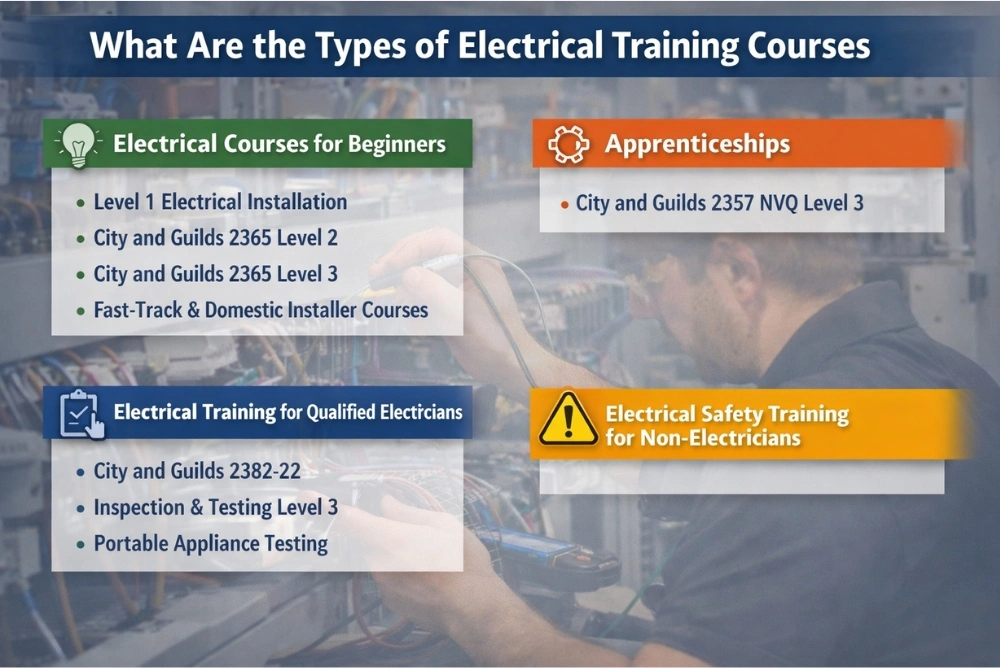
Electrical Courses for Beginners and Career Changers
These courses provide the first step into the electrical trade. Many people searching for electrical courses for beginners or basic electrical training courses start with entry-level qualifications such as Level 1 or Level 2 Electrical Installation.
These programmes teach the fundamentals of electrical science, wiring methods, safety rules, and basic testing procedures.
- Level 1 Electrical Installation – Foundation Skills: This starter course introduces wiring theory, safe isolation procedures, and UK building regulations. It is designed for people with no previous electrical experience.
- City and Guilds 2365 Level 2 Electrical Installations: Level 2 provides the foundation for becoming an electrical improver. Learners study electrical science, consumer units, domestic wiring, and installation techniques.
- City and Guilds 2365 Level 3 Electrical Installations: Level 3 builds on earlier learning and prepares students for the NVQ Level 3 qualification. The course includes training in inspection and testing, fault finding, and advanced electrical systems.
- Combined Level 2 and Level 3 Diploma (2365): Some providers offer a combined programme for career changers who want to complete both levels more quickly. Level 2 focuses on core science and wiring skills, while Level 3 develops advanced inspection and testing abilities.
- Fast-Track and Domestic Installer (Part P) Courses: These shorter programmes focus on domestic electrical work and Part P compliance for residential installations.
Apprenticeships in Electrical Installation
An apprenticeship combines paid employment with formal training at a college or training centre.
- City and Guilds 2357 NVQ Level 3: This qualification is the standard pathway to becoming a fully qualified electrician in the UK. Apprentices gain on-site experience while completing coursework and assessments. Many apprenticeships are funded through employer schemes and government support.
Electrical Training for Qualified Electricians (Upskilling and CPD)
Qualified electricians often take additional training to keep their skills up to date or specialise in new areas.
- City and Guilds 2382-22 – 18th Edition Wiring Regulations: This course ensures electricians understand the latest wiring regulations issued by the Institution of Engineering and Technology (IET).
- Inspection and Testing Level 3 (2391): This qualification teaches electricians how to inspect, test, and certify electrical installations.
- Portable Appliance Testing (PAT – City & Guilds 2377): PAT training focuses on testing and inspecting portable electrical equipment used in workplaces.
- EV Charging Installation Level 3 (2921-31): This course covers the safe installation of electric vehicle charging points.
- Solar PV and Battery Storage Courses: These programmes focus on renewable energy systems and energy storage technologies.
- Experienced Worker Assessment Level 3 (2346-03): This pathway allows experienced electricians who lack formal qualifications to gain recognised certification.
Electrical Safety Training for Non-Electricians
Electrical safety courses help workers who do not perform electrical installation work but still operate near electrical equipment.
Many workplaces require electrical safety training for non-electricians to reduce workplace hazards.
Builders, maintenance staff, site managers, and office employees often complete these programmes. Training explains electrical risks, safe isolation procedures, and safe behaviour around electrical systems.
Electrical Training Near Me: Popular Training Providers
People who search for electrical training near them often compare UK training providers, trade centres, and apprenticeship routes before they choose a course. Many UK electrical training providers offer City & Guilds qualifications, 18th Edition Wiring Regulations training, inspection and testing courses, and hands-on workshop lessons for beginners and skilled electricians. The providers below offer different training routes across the UK electrical industry.
Alpha BSE Training
Alpha BSE Training offers electrical courses along with plumbing, gas, HVAC, and renewable energy training. Its electrical programmes include Electrical Installation, Part P, PAT testing, Inspection and Testing, and wiring regulations courses. The centre uses practical workshop sessions to help learners build real trade skills. Many adult learners choose these courses when they want flexible electrician training and recognised qualifications.
Lift Technical and Electronics Training
Lift Technical and Electronics Training provides electrical and lift engineering courses for apprentices, electricians, and engineers. Its training includes City & Guilds Level 2 and Level 3 Electrical Installation diplomas, PAT testing, EV charging, Part P, and inspection courses. The provider also teaches specialist lift engineering skills. Many learners use this route to gain both electrical and technical industry knowledge.
Electrical Training Courses
Electrical Training Courses focuses on electrician training and recognised UK electrical qualifications. The provider offers domestic installer training, wiring regulations courses, inspection and testing qualifications, and practical electrical study programmes. These courses support learners who want to enter the trade or improve existing skills. Many people compare these programmes when searching for accredited electrician courses near them.
Trade Skills 4U
Trade Skills 4U is a popular UK electrician training provider for beginners, career changers, and qualified electricians. Its courses include electrical NVQs, City & Guilds qualifications, and practical installation training. The provider focuses on hands-on learning and clear career pathways into the electrical sector. Many learners also choose its renewable energy and EV charging courses to expand their skills.
Trades Training Centre
Trades Training Centre provides electrical training built around practical learning and workshop experience. The centre offers electrical installation courses, wiring regulations study, and safety training used on UK work sites. Its programmes suit trade learners who want hands-on experience and flexible study options. Many adults choose these courses while balancing work and training.
Electrical Courses UK
Electrical Courses UK specialises in electrician training for beginners and skilled electricians. The provider offers electrical qualifications, AM2 assessments, and advanced electrical courses. Its training centre in Cambridgeshire supports learners working towards recognised UK electrical certifications. Many learners use these programmes to improve practical skills and prepare for industry assessments.
Electrician Courses 4U
Electrician Courses 4U delivers practical electrician training for new learners and experienced electricians. Its programmes cover domestic installation, inspection and testing, EV charging, solar PV systems, and electrical safety training. The provider is known for hands-on workshop lessons that help learners practise real installation work. Many career changers choose these courses to build practical electrical skills quickly.
| Training Provider | Main Training Areas | Suitable For | Typical Course Types |
|---|---|---|---|
| Alpha BSE Training | Electrical installation and trade skills | Beginners and adult learners | Part P, PAT, Inspection and Testing |
| Lift Technical and Electronics Training | Electrical and lift engineering | Apprentices and engineers | Level 2 and Level 3 Diplomas, EV charging |
| Electrical Training Courses | Domestic and electrical qualifications | Career changers | Wiring regulations and installer courses |
| Trade Skills 4U | Electrician and NVQ training | Beginners and electricians | City & Guilds and NVQ programmes |
| Trades Training Centre | Practical electrical workshop training | Trade learners | Electrical installation and safety training |
| Electrical Courses UK | Electrician qualifications and AM2 | Beginners and qualified electricians | Electrical qualifications and AM2 assessments |
| Electrician Courses 4U | Practical electrician training | Career changers and electricians | Solar PV, EV charging, and inspection training |
Who Should Take an Electrical Training Course?
Electrical training courses suit several types of learners who want skills in electrical work or knowledge about electrical safety.
The groups below often enrol in electrician training programmes.
- Aspiring electricians and school leavers: Young learners begin with entry-level electrical installation courses. These lessons teach basic wiring, safe work steps, and core electrical ideas. Training also prepares them for apprenticeships and NVQ Level 3 study.
- Career changers: Adults who enter skilled trades often start with City & Guilds Level 2 Electrical Installation training. This course explains electrical science, simple installation work, and basic trade safety.
- Qualified electricians: Experienced electricians take refresher training to update their skills. Many study EV charger installation, solar PV systems, inspection work, and advanced electrical testing methods.
- Other trades: Builders, HVAC technicians, and maintenance workers often join electrical safety awareness training. This study explains electrical risks, safe isolation steps, and safety rules used on work sites.
What Are the Benefits of Enrolling in Electrical Training Programmes
Electrical training programmes offer several advantages, including job demand, safety knowledge, hands-on skills, career growth, and recognised qualifications in the UK electrical industry.
The main benefits of enrolling in electrical training programmes are listed below.
- High demand and career security: Electrical systems power homes, offices, factories, and public buildings. Skilled electricians remain essential for construction, maintenance, and energy projects across the UK labour market.
- Safety and regulatory knowledge: Electrical training explains safe isolation, wiring rules, and national safety standards. Learners study the 18th Edition Wiring Regulations and understand how electrical systems operate safely.
- Practical problem-solving skills: Hands-on workshop training develops practical thinking and fault diagnosis. Students wire circuits, test systems, and identify problems in electrical installations during supervised practical lessons.
- Career progression: Electrician training provides a clear learning pathway from beginner courses to advanced qualifications. A trainee moves from basic installation study toward specialist roles, technical supervision, or project leadership.
- Recognised industry qualifications: Electrical courses lead to respected certifications such as City & Guilds diplomas, NVQ Level 3 qualifications, and the ECS card used across the UK electrical sector.
How to Find Electrical Training Courses Near You in the UK
To find electrical training courses near your area, start with trusted education providers and recognised industry routes. A simple local search helps learners locate nearby training centres, structured programmes, and approved qualifications. Local study options also give access to practical workshops and supervised training.
Here are 4 steps to find electrical training courses near you.
1. Colleges and Local Training Centres
Local colleges and trade training centres provide a common starting point for people who search for electrical training courses near them. These institutions deliver structured lessons and practical workshop training that build real trade skills.
Many programmes follow standards set by organisations such as City & Guilds, EAL (Excellence, Achievement and Learning), and NICEIC (National Inspection Council for Electrical Installation Contracting). Students learn electrical basics in classrooms and practise tasks in training workshops. Practical lessons include wiring circuits, safe isolation, installing consumer units, and testing electrical systems.
Tutors guide each step and explain safety rules in clear language. Many colleges across the UK run evening or part-time classes for adults who work during the day.
2. Online and Blended Electrical Training Programmes
Online electrical training programmes offer flexible study options through digital learning platforms. Learners read study materials, watch guided lessons, and complete short tests that explain electrical science and safety rules.
A blended programme mixes online study with in-person training. Students complete theory lessons at home and attend a training centre for workshop sessions or final assessments. Practical work takes place under supervision where learners practise wiring, installation, and testing.
This study format suits people who need flexible learning hours while gaining practical experience.
3. Employer-Sponsored Training and Apprenticeships
Electrical apprenticeships provide another route into the trade. This pathway combines paid work with structured education. An apprentice works on real job sites and attends scheduled lessons at a training centre.
Most apprenticeship programmes include the NVQ (National Vocational Qualification) Level 3 in Electrical Installation. This qualification forms the main industry standard in the UK electrical sector.
Daily site work builds hands-on experience. Tasks include cable installation, circuit testing, and equipment maintenance.
4. Accredited Schemes and Certification Bodies
Accredited organisations maintain quality standards in electrician training. Many electrical courses follow guidelines set by recognised awarding bodies such as City & Guilds and EAL.
Industry groups also confirm professional competence. The Joint Industry Board manages the Electrotechnical Certification Scheme. This programme issues the ECS (Electrotechnical Certification Scheme) card, which confirms electrical skill and safety knowledge.
Training providers linked to these organisations deliver recognised qualifications that support employment across the UK electrical industry.
How to Choose the Right Electrical Training Provider
Choosing the right electrical training provider helps learners gain practical skills, trusted qualifications, and strong safety knowledge. A careful choice improves training quality and long-term career progress.
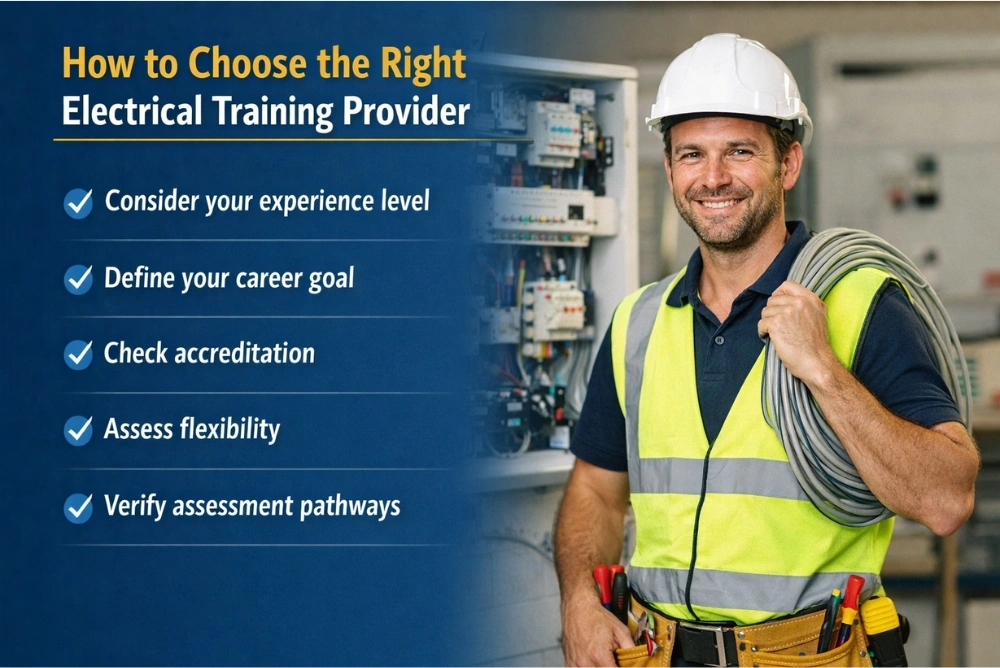
- Consider your experience level: Beginners often start with structured courses such as the City & Guilds 2365 electrical installation programme. Experienced workers follow NVQ training or the Experienced Worker Assessment route.
- Define your career goal: Electrical careers include domestic wiring, commercial installation, and industrial maintenance. A course that fits the chosen path builds the right job skills and site knowledge.
- Check accreditation: Accredited training centres follow industry standards set by recognised organisations. These include City & Guilds, EAL, NICEIC, and the Joint Industry Board.
- Assess flexibility: Some training providers offer evening classes, weekend sessions, or blended study formats. Flexible schedules help learners balance study, work, and daily responsibilities.
- Verify assessment pathways: A reliable training provider explains the full qualification route. This route includes NVQ Level 3, the AM2 assessment, and the ECS Gold Card used in the UK electrical trade.
How to Become a Qualified Electrician
Becoming a qualified electrician involves structured training, practical experience, and recognised industry qualifications. The process follows a clear pathway that develops electrical knowledge, installation skills, and safety awareness used across the UK electrical industry.
1. Start with Electrical Training
Electrical training begins with a basic course in electrical installation. Many learners start with City & Guilds Level 2 Electrical Installation. This programme explains electrical science, wiring systems, and safety procedures used in homes and buildings.
Students learn key ideas such as voltage, current, resistance, and safe isolation. Training also introduces the 18th Edition Wiring Regulations (BS 7671) used across the UK electrical sector.
2. Progress to Level 3 Electrical Installation
After completing Level 2 training, learners move to Level 3 Electrical Installation. This stage develops advanced skills such as inspection, testing, and fault finding.
Practical training becomes more detailed at this stage. Students work with distribution boards, protective devices, and complex wiring systems.
3. Gain Workplace Experience
Workplace experience forms a major part of electrician training. Many learners gain this experience through an electrical apprenticeship or work placement.
During this stage, trainees assist qualified electricians on real job sites. They install cables, connect circuits, and test electrical systems under supervision.
4. Complete NVQ Level 3 in Electrical Installation
The NVQ Level 3 in Electrical Installation confirms professional competence. This qualification assesses real work completed on site.
Learners build a portfolio that records installation tasks, testing work, and safety procedures. Assessors review this evidence to confirm practical ability.
5. Pass the AM2 Assessment
The AM2 assessment acts as the final practical test for electricians in the UK. This exam measures installation work, inspection, testing, and fault finding.
Candidates complete tasks in a controlled assessment centre. Successful completion confirms industry-standard electrical competence.
6. Obtain the ECS Gold Card
After completing NVQ Level 3 and the AM2 assessment, electricians apply for the Electrotechnical Certification Scheme (ECS) Gold Card.
This card proves professional skill and safety knowledge. Many employers and construction sites require it for electrical work.
Funded Electrician Courses in the UK
Some electrical training programmes are partly or fully funded through government or industry initiatives.
Funding may be available through:
- Apprenticeship funding for employers
- Adult Education Budget (AEB) programmes
- Construction and green energy skills bootcamps
These schemes help reduce the cost of training for eligible learners and encourage more people to enter skilled trades.
What Are the Costs of Electrical Training Courses in the UK?
The costs of electrical training courses in the UK vary by qualification level. Short courses such as the 18th Edition or PAT testing often cost £200–£600. Level 2 and Level 3 electrical installation diplomas usually range from £2,000–£4,000, while full NVQ Level 3 and AM2 qualification pathways may cost £6,000–£12,000.
What Career Paths Are Available After Electrical Training?
After electrical training, many job paths open. Each role uses your skills in a different way.
- Residential electrician: Residential electricians install and repair wiring, consumer units, and lights in houses and flats. In the UK, you need Part P registration to work on domestic systems. Demand stays strong because homes often need upgrades, rewiring, and renovation work.
- Commercial electrician: Commercial electricians work in offices, shops, and schools. They install three-phase wiring, emergency lighting, and data lines. Many employers ask for NVQ Level 3, the AM2 assessment, and the ECS Gold Card. These jobs often involve larger systems than home work.
- Industrial electrician: Industrial electricians work in factories and plants. They deal with machines, motors, and high-voltage power. Safety rules are strict. The role often includes fault finding, system checks, and repair of heavy equipment.
- Renewable energy technician: Renewable energy technicians install solar PV panels, wind systems, and battery storage. The UK green energy sector keeps growing. City & Guilds renewable courses help workers enter this field and access funded jobs.
- Smart home electrician: Smart home electricians install smart lights, sensors, and security systems. They also connect IoT devices that control heating and energy use. Demand rises as more homes adopt automation and energy-saving systems.
- Electrical project manager or estimator: Project managers lead electrical jobs from start to finish. They manage teams, schedules, and budgets. Estimators plan project costs and prepare tenders. Both roles need strong site experience and extra training after NVQ Level 3.
Why You Should Become an Electrician
You should become an electrician because the trade offers stable work, practical tasks, and clear career progress. Electricians install and maintain wiring systems used in homes, offices, and factories across the UK. The role also involves modern technology such as EV charging, renewable energy systems, and smart building controls.
Final Thoughts
Electrical training courses provide a clear pathway into a stable and rewarding trade. From beginner courses to advanced qualifications, each stage builds the knowledge and experience needed to work safely and professionally.
If you are ready to start your journey, begin by searching for electrical training courses near you offered by accredited UK training centres. With the right training and dedication, you can build a long-term career in one of the UK’s most essential skilled trades.
Frequently Asked Questions (FAQs)
A: Many beginner courses need no prior qualifications. Entry-level programs like City & Guilds Level 1 or Level 2 are open to anyone who wants to learn basic wiring and safety skills.
A: It usually takes 3–4 years through an apprenticeship route. Adult learners can complete diplomas or the Experienced Worker Assessment, which may shorten the timeline depending on past experience.
A: Some parts, like theory lessons, are available online. However, all practical tasks, tests, and final exams must be done in person at an approved centre.
A: The City & Guilds 2365 Level 2 and Level 3 diplomas are ideal for career changers. They provide a structured route to NVQ Level 3 and full electrician status.
A: Pay depends on age and employer. In the UK, apprentices earn at least the national minimum wage, with many earning more as they gain skills during training.