Heat pump training teaches people how to use and fit systems that heat and cool buildings efficiently. A heat pump moves warmth from the air, ground, or water to keep homes cosy in winter and cool in summer. This guide shows the main types of heat pumps and how they work. It also explains why training helps save energy and cut carbon use. You’ll learn about key skills, certificates, and job paths. Whether starting out or improving your skills, this training leads to cleaner, smarter energy work.
What is a Heat Pump?
Heat pumps are innovative devices that transfer heat between locations, offering a highly efficient way to heat or cool buildings. Unlike traditional systems that burn fuel to create heat, heat pumps transfer existing heat from the air, ground, or water. This key difference increases energy efficiency, reduces dependence on fossil fuels, and helps lower carbon emissions. Heat pump training is essential to understanding how these systems work and maximise their benefits.
Importance in Modern Energy Systems
As the world shifts towards cleaner and more sustainable energy solutions, heat pumps have become a vital part of the modern energy landscape. Governments and industries worldwide are investing in this technology to meet their carbon reduction targets, and the increasing demand for qualified professionals in this field reflects the pivotal role heat pumps play in the global energy transition.
Types of Heat Pumps and Their Applications

Air Source Heat Pumps
Air Source Heat Pumps (ASHPs) are the most widely used type of heat pump. They extract heat from outdoor air, even in cold conditions, and transfer it indoors to heat buildings. Additionally, ASHPs can reverse the process to provide cooling during summer. Their popularity stems from their wide use in residential and commercial properties, along with easy installation. This makes them a preferred choice in heat pump training programs.
Ground Source Heat Pumps
Ground Source Heat Pumps (GSHPs), also known as geothermal heat pumps, harness heat stored in the ground. They involve the installation of underground pipes to collect heat from the earth and use it for space heating. While the initial installation costs can be higher due to the need for ground excavation, GSHPs offer greater efficiency and lower long-term operating costs.
Water Source Heat Pumps
Water Source Heat Pumps work similarly to ground source systems, but instead of drawing heat from the ground, they extract heat from a nearby water source, such as a lake or river. This type of system can be extremely efficient, but its application is limited by the proximity of an appropriate water source.
Hybrid Heat Pumps
A Hybrid Heat Pump combines a heat pump with a traditional heating system, such as a gas boiler. This type of system can automatically switch between the two heat sources depending on the outside temperature and the efficiency of the heat pump at that moment. Hybrid heat pumps are particularly useful in colder climates where heat pumps alone may struggle to meet high heating demands during extreme winter conditions.
How Heat Pumps Work
Refrigeration Cycle
At the heart of a heat pump’s operation lies the refrigeration cycle. This crucial process facilitates heat transfer using a refrigerant. The cycle involves four key stages: evaporation, compression, condensation, and expansion. First, the refrigerant absorbs heat from the source—be it air, ground, or water. Next, it compresses the heat to elevate the temperature. After this, it releases the heat inside the building. Conversely, the cycle can reverse to provide cooling. Thus, understanding this cycle is essential in heat pump training.
Heat Transfer Principles
Heat pumps operate on the principle of heat transfer, meaning they move heat from a cooler space to a warmer space. In the case of a heat pump used for heating, the pump extracts heat from the cold outdoor environment and moves it indoors. This ability to move heat, rather than create it, makes heat pumps extremely energy-efficient.
Efficiency Comparisons with Other Systems
Heat pumps are significantly more efficient than traditional heating systems like gas boilers or electric heaters. This is because they only need a small amount of energy to transfer a large amount of heat. For example, a heat pump can achieve efficiencies of 300% to 400%, meaning it delivers three to four times more energy than it consumes. By contrast, conventional electric heaters typically operate at 100% efficiency, converting all consumed energy directly into heat.
Overview of Heat Pump Training Programs
Basic Training Programs
Basic heat pump training programs are designed for individuals new to the technology or professionals from related fields such as HVAC who want to expand their skills. These courses typically cover the fundamentals of heat pump operation, installation techniques, and basic maintenance tasks.
Advanced Training Options
For more experienced technicians, advanced training programs provide deeper knowledge of complex system designs, troubleshooting, and optimising heat pump performance for different environments. These programs are essential for professionals looking to specialise in high-efficiency installations, commercial applications, or large-scale systems.
Hands-on vs Theoretical Learning
While theoretical knowledge is crucial, most heat pump training programs include hands-on learning to ensure students gain practical experience. This typically involves working with real equipment, simulating installations, and performing maintenance tasks. Combining both learning approaches allows trainees to fully understand how to design, install, and maintain heat pump systems in real-world settings.
Industry Certifications and Standards
Essential Certifications
To become a certified heat pump installer or technician, various certifications are required depending on the country and specific role. In the UK, the Microgeneration Certification Scheme (MCS) is crucial for those installing renewable energy systems, including heat pumps. Additionally, the Building Regulations Part L covers energy efficiency requirements for heating installations, and compliance is mandatory.
National and International Standards
Beyond certifications, adhering to relevant national and international standards is critical for heat pump professionals. Standards such as ISO 9001 for quality management systems and ISO 14001 for environmental management are widely recognised and ensure that heat pump installations are both safe and efficient.
Compliance and Regulations
Heat pump professionals must remain up-to-date with evolving regulations to ensure that installations meet the latest environmental, safety, and energy efficiency standards. This includes understanding government policies related to carbon reduction, building codes, and financial incentives for renewable energy projects.
Importance of Heat Pump Training
Energy Efficiency
Proper heat pump training ensures that technicians understand how to install and maintain systems in a way that maximises energy efficiency. Efficient installations not only reduce operating costs for customers but also help meet national and international energy-saving targets, making training an essential component of the renewable energy transition.
Sustainability Goals
As countries worldwide seek to reduce their carbon footprints, heat pump technology has emerged as a key contributor to achieving these sustainability goals. Trained professionals are needed to install systems that meet the stringent environmental criteria set by governments, further underlining the importance of specialised heat pump training.
Career Opportunities
With the rapid growth of the heat pump market, demand for skilled professionals is rising. Completing accredited heat pump training opens up a wide range of career opportunities, from residential installations to large-scale commercial projects, system design, and consultancy roles.
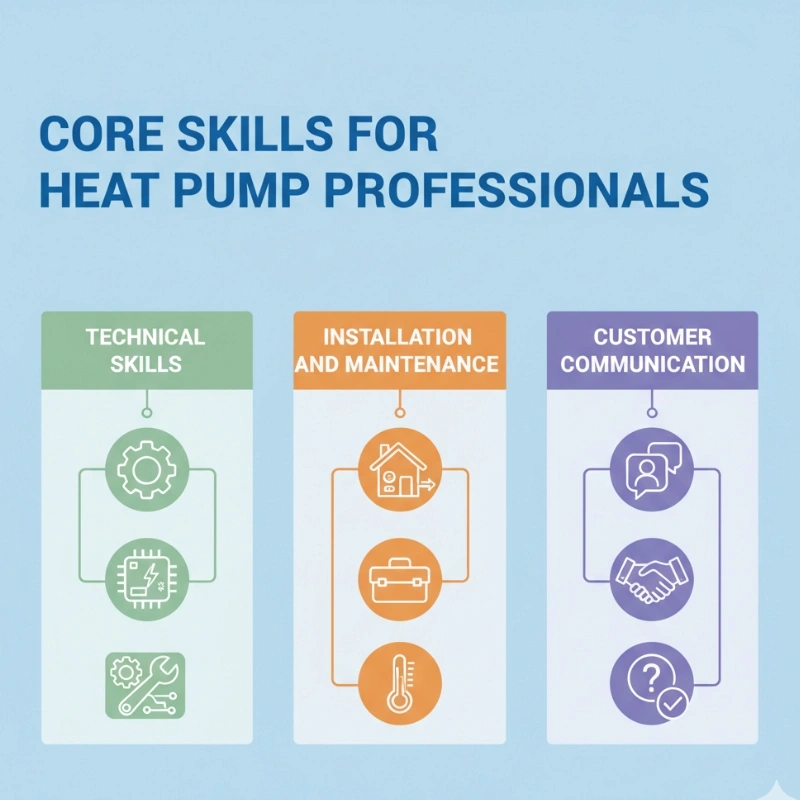
Core Skills for Heat Pump Professionals
Technical Skills
Heat pump professionals must possess a solid understanding of technical skills, including electrical systems, plumbing, and refrigeration. These skills are vital for the correct installation, operation, and maintenance of heat pumps, as well as ensuring the safety and longevity of the systems.
Installation and Maintenance
Proper installation and maintenance are crucial for heat pump performance. To begin with, installation needs thorough planning, site assessments, and accurate system sizing. This ensures the pump works efficiently in its environment. Meanwhile, heat pump training equips technicians with the skills to identify and address issues promptly. Consequently, regular maintenance helps sustain the system’s optimal performance over time.
Customer Communication
In addition to technical skills, heat pump professionals must be adept at customer communication. This includes explaining the benefits and operation of heat pumps, providing clear instructions on maintenance, and addressing any concerns or issues that may arise post-installation.
Heat Pump Installation Process
Site Assessment
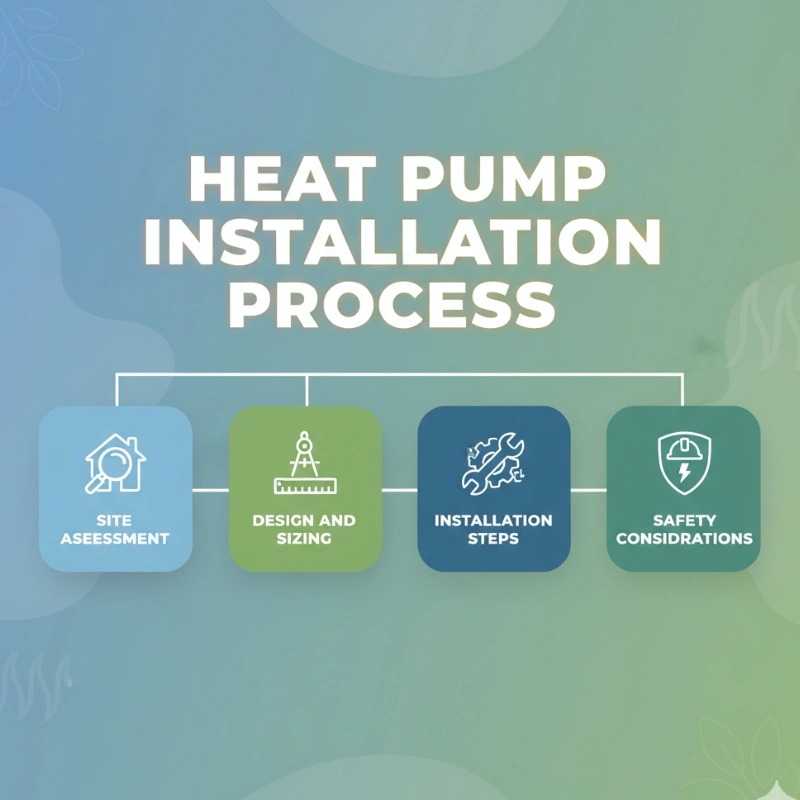
Before installing a heat pump, a comprehensive site assessment is necessary. This involves evaluating the property’s heating and cooling needs, examining potential locations for the pump, and assessing any environmental factors that may influence performance, such as the availability of a water source for water source heat pumps.
Design and Sizing
Effective heat pump training highlights the importance of proper system design and sizing. A system that’s too small often fails to meet the building’s heating or cooling needs. Conversely, a system that’s too large leads to wasted energy and higher costs. Therefore, during the design phase, technicians use detailed calculations. These calculations ensure the system size and layout achieve maximum efficiency.
Installation Steps
The installation process generally involves multiple stages, including preparation of the site, installing the indoor and outdoor units, connecting refrigerant lines, and integrating the system with the building’s electrical and plumbing infrastructure. Ensuring that all components are correctly installed and calibrated is crucial for optimal system performance.
Safety Considerations
Safety remains a top priority throughout heat pump installation. First, professionals must adhere to health and safety protocols. This is especially crucial when handling refrigerants and electrical components. Furthermore, proper heat pump training equips technicians with the knowledge needed to follow these precautions. Consequently, they can prevent accidents and guarantee safe system operation.
Heat Pump Maintenance and Troubleshooting
Routine Maintenance
Routine maintenance is essential to keep heat pumps operating at peak efficiency. This includes tasks such as checking refrigerant levels, cleaning filters, inspecting electrical connections, and ensuring that the system is free from leaks. Regular maintenance can extend the lifespan of the heat pump and prevent costly repairs.
Common Issues and Solutions
Heat pumps sometimes face issues like reduced efficiency, refrigerant leaks, or faulty components. Fortunately, with heat pump training, a skilled technician can quickly diagnose and fix these problems. This approach ensures minimal disruption to the system’s operation. Common solutions include recharging refrigerants, replacing faulty parts, and recalibrating the system.
Importance of Regular Servicing
Regular servicing not only prevents breakdowns but also ensures that the system continues to operate efficiently. Many manufacturers recommend annual servicing to maintain warranty coverage and maximise the system’s lifespan.
Career Paths in Heat Pump Technology
Installer
Heat pump installers play a crucial role in setting up systems across residential, commercial, and industrial settings. Firstly, they conduct site assessments to determine the best installation approach. Next, they design the system to meet specific needs and ensure it operates efficiently. Additionally, they must comply with all relevant standards and regulations. Overall, effective heat pump training equips installers with the skills needed for these tasks.
Technician
Heat pump technicians specialise in maintaining and repairing systems. They troubleshoot issues, perform routine maintenance, and ensure that the system operates at optimal efficiency throughout its lifespan.
System Designer
System designers work closely with engineers to create heat pump systems tailored to a building’s needs. They must understand heat transfer principles, system sizing, and integration with other energy systems. Moreover, they ensure that the design meets specific requirements. Consequently, their role involves extensive heat pump training to address these challenges effectively.
Sales and Consultancy
As the demand for heat pumps grows, so does the need for knowledgeable sales professionals and consultants. These experts advise customers on the best systems for their needs and help them navigate government incentives and financing options.
The Role of Heat Pumps in Energy Policy
Government Initiatives
Many governments have introduced initiatives to encourage the adoption of heat pump technology. These include grants, tax incentives, and subsidies aimed at reducing the upfront cost of installation and making heat pumps more accessible to homeowners and businesses.
Subsidies and Grants
In the UK, for example, the Green Homes Grant has provided financial assistance to homeowners looking to install energy-efficient technologies such as heat pumps. Similar schemes exist in many other countries as part of broader efforts to meet carbon reduction targets.
Global Energy Transition
The global move towards renewable energy is accelerating, and heat pumps are at the forefront of this transition. With governments aiming to reduce reliance on fossil fuels, the role of heat pumps in heating and cooling systems is expected to grow significantly in the coming years.
Heat Pump Training for HVAC Professionals
Upskilling HVAC Technicians
Many HVAC technicians are seeking to upskill in heat pump technology as traditional HVAC systems are increasingly being replaced by more energy-efficient alternatives. Heat pump training offers HVAC professionals the opportunity to stay current in a rapidly evolving industry.
Heat Pumps vs Traditional HVAC Systems
Compared to traditional HVAC systems, heat pumps offer a more energy-efficient and environmentally friendly solution. Understanding the differences between these systems is crucial for HVAC professionals who want to provide their customers with the best options for heating and cooling.
Challenges and Future Trends in Heat Pump Technology
Technological Innovations
As the demand for heat pumps grows, so does the pace of technological innovation. Future developments are expected to focus on improving system efficiency, reducing installation costs, and integrating heat pumps with other renewable energy sources such as solar panels.
Overcoming Installation Barriers
Despite their benefits, heat pumps face installation barriers, such as high upfront costs and the need for significant space for ground and water source systems. Addressing these challenges will be key to expanding the adoption of heat pump technology.
Future Market Predictions
The future of the heat pump market looks promising, with significant growth expected over the next decade. As more countries implement carbon reduction policies, demand for heat pumps is set to rise, creating new opportunities for professionals in the field.
Costs and Financing Heat Pump Training
Course Fees and Financial Aid
Heat pump training can vary in cost depending on the level of expertise and the type of course offered. Many institutions provide financial aid or payment plans to help make these programs more accessible to aspiring professionals.
Return on Investment in Training
Investing in heat pump training can lead to significant returns, as qualified technicians are in high demand. With government incentives and the growing adoption of heat pumps, trained professionals can expect strong job security and competitive salaries.
Online vs In-Person Training
Pros and Cons of Each
Both online and in-person heat pump training programs offer unique advantages. Online courses provide flexibility and can be more accessible for those who cannot attend in person. In contrast, in-person training offers hands-on experience with real equipment, which is essential for mastering the practical aspects of heat pump installation and maintenance.
Hybrid Learning Options
Many training providers now offer hybrid learning options that combine online theoretical learning with in-person practical training. This approach allows students to benefit from the best of both worlds and fits various learning preferences.
Last Thoughts
In conclusion, heat pump training is crucial for anyone looking to enter or advance in the renewable energy sector. With growing demand for energy-efficient systems, government incentives, and a global focus on sustainability, heat pumps are set to become an even more integral part of modern heating and cooling solutions. Trained professionals will play a key role in this transition, making heat pump training a valuable investment for a sustainable career in the energy sector.
Frequently Asked Questions (FAQs)
Q: What qualifications do I need to become a heat pump installer?
A: To become a certified heat pump installer, you typically need to complete accredited training programs and gain practical experience. In the UK, certifications such as the MCS and compliance with building regulations are essential.
Q: How long does heat pump training take?
A: The duration of heat pump training varies depending on the course level. Basic courses may take a few weeks, while advanced training and certification can take several months.
Q: Can HVAC technicians install heat pumps?
A: Yes, HVAC technicians can install heat pumps, provided they have undergone the necessary training to understand the differences between traditional HVAC systems and heat pumps.
Q: Is there demand for heat pump installers?
A: Yes, the demand for heat pump installers is growing rapidly due to government initiatives promoting renewable energy and the increasing focus on energy efficiency.
Q: What is the cost of heat pump training?
A: The cost of heat pump training varies depending on the provider and the level of expertise offered. However, many institutions provide financial aid and government-backed grants to help cover the costs.
Q: Are heat pump installers paid well?
A: Yes, heat pump installers are well-compensated, especially as demand for their skills continues to rise. Salaries can vary based on experience and location, but the job offers strong earning potential.