Air source heat pump (ASHP) courses are your fast track into one of the most in-demand skills in modern HVAC and low-carbon heating. ASHPs use electricity to move heat from outdoor air into a building—working efficiently even in freezing conditions—and can also reverse to provide cooling. Because they cut bills and carbon emissions compared to gas or oil systems, governments and homeowners are backing them with grants and policy targets, creating strong career opportunities for trained installers and designers.
In this guide, you’ll get a clear, beginner-friendly overview of ASHPs—what they are, how the refrigeration cycle works, the core components, and the two main system types (monobloc vs split). You’ll also learn why now is the right time to upskill, what a professional course actually covers (from heat-loss calculations and system sizing to commissioning, maintenance, and fault-finding), which certifications matter (MCS, F-Gas, LCL/BPEC), who the courses are for (new entrants and experienced trades), and typical costs, durations, and funding options. By the end, you’ll know exactly which training path fits your background—and how to turn ASHP expertise into real, future-proof career growth.
Table of Contents
- What is an Air Source Heat Pump?
- Why Learn About Air Source Heat Pumps?
- What Does an Air Source Heat Pump Course Include?
- Who Should Take The Air Source Heat Pump Course?
- Certifications and Accreditation of Air Source Heat Pump
- Skills and Tools You Will Learn about Air Source Heat Pump
- Career Opportunities After Completing the Air Source Heat Pump Course
- Cost, Duration, and Enrolment Process of Air Source Heat Pump
- Alternatives and Related Training Paths of Air Source Heat Pump
- FAQs about Air Source Heat Pump
What is an Air Source Heat Pump?
An air source heat pump (ASHP) is a highly efficient renewable heating and cooling system that captures thermal energy from the outside air and transfers it indoors to provide warmth, hot water, or air conditioning. Unlike gas or oil boilers that generate heat through combustion, an ASHP uses electricity to move existing heat, similar to how a refrigerator works, but in reverse.
This makes air source heat pumps a key solution for low-carbon homes, helping reduce energy bills and reliance on fossil fuels while supporting climate and sustainability goals.
How Does an Air Source Heat Pump Work?
Air source heat pumps operate through a closed refrigeration cycle, designed to work even in freezing temperatures. The cycle consists of four main stages:
Heating Mode
- Absorption (Outdoor Coil): The outdoor unit’s fan draws in air, which passes over a refrigerant-filled coil. Even at -15°C, the refrigerant can absorb this ambient heat and vaporise.
- Compression: An electric compressor squeezes the vapour, raising its pressure and temperature.
- Heat Transfer (Indoor Coil): The hot, high-pressure gas moves to an indoor condenser coil, where it releases its heat into your central heating system (radiators, underfloor heating, or hot water tank).
- Expansion & Reset: After transferring its heat, the refrigerant cools, passes through an expansion valve, and returns to a liquid state, ready to restart the cycle.
Cooling Mode
By reversing the flow of refrigerant with a reversing valve, the system can also function like an air conditioner:
- Absorption: The indoor coil becomes the evaporator, absorbing heat from inside your home.
- Transfer: The refrigerant carries this heat outdoors.
- Release: The outdoor coil acts as the condenser, releasing the heat back into the air.
This allows ASHPs to provide year-round comfort.
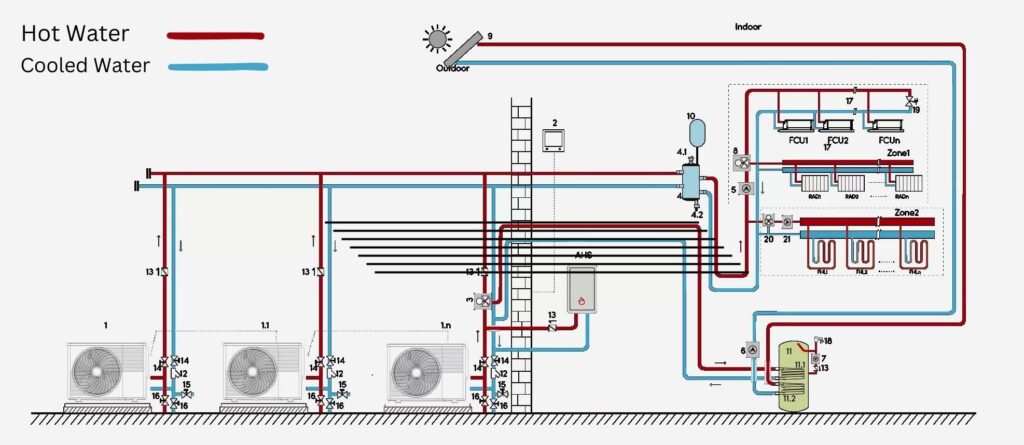
Core Components of an Air Source Heat Pump
The performance of an ASHP depends on several key components working together:
- Refrigerant: The fluid that absorbs and transports heat.
- Compressor: Increases refrigerant pressure and temperature.
- Evaporator Coil: Extracts heat from outdoor air.
- Condenser Coil: Transfers heat into the home’s system.
- Expansion Valve: Reduces refrigerant pressure before restarting the cycle.
- Reversing Valve: Switches between heating and cooling.
- Fans: Move air over coils to facilitate heat exchange.
Together, these components create a sustainable, closed-loop system that reduces reliance on traditional fuels.
Types of Air Source Heat Pumps
There are two main categories of ASHPs, each suited to different installation needs and climates:
Monobloc Systems
- Design: All parts of the system (compressor, evaporator, and heat exchanger) are housed in one compact outdoor unit.
- Installation: Only water pipes run from the outdoor unit to the home’s heating system, making installation simpler and cheaper.
- Application: Homes with limited indoor space or straightforward retrofits. In colder climates, antifreeze may be needed to protect the pipes.
Split Systems
- Design: The system is divided into an outdoor unit (compressor + evaporator) and an indoor unit (heat exchanger).
- Installation: Requires refrigerant lines between units, meaning a qualified HVAC technician must install and service it.
- Application: Higher efficiency in colder climates, flexible placement options, and homes needing maximum performance.
Why Learn About Air Source Heat Pumps?
The demand for air source heat pump (ASHP) professionals is rising rapidly worldwide as governments, industries, and homeowners shift toward low-carbon heating technologies. For anyone in the HVAC, plumbing, or renewable energy sectors, learning how to design, install, and maintain ASHP systems provides a future-proof career advantage.
Market Demand and Industry Growth
- Boiler Phase-Outs: Countries like the UK are phasing out fossil fuel boilers, with new oil boiler bans expected as early as 2025. This shift makes ASHPs the go-to replacement for sustainable heating.
- Government Targets: The UK government aims to roll out hundreds of thousands of heat pumps annually under its Heat and Buildings Strategy. Although rollout has been slower than expected, the policy direction is clear: heat pumps are here to stay.
- Commercial & Industrial Growth: Beyond homes, the industrial heat pump market is projected to grow at a 10.2% CAGR between 2026 and 2033, fueling demand for skilled professionals in large-scale applications.
- Global Expansion: ASHP adoption is accelerating in Europe and North America, while Asia already leads with widespread implementation, ensuring a global skills market.
Role in Sustainable Energy and Modern HVAC Systems
- Decarbonization of Heating: Heating accounts for a large share of emissions. ASHPs replace fossil fuel systems with a clean, electric alternative, helping meet net-zero targets.
- Exceptional Efficiency: For every unit of electricity consumed, ASHPs deliver 2–4 units of heat, reducing both energy use and utility costs.
- Renewable Energy Synergy: When combined with solar PV or wind energy, ASHPs can operate as a near carbon-neutral solution.
- Future-Proof HVAC: As net-zero building codes tighten, ASHPs are becoming the standard for new builds and retrofits, supported by smart inverters and advanced climate control technology.
Government Incentives and Support
Governments are actively promoting heat pumps with financial incentives, subsidies, and grants:
- United Kingdom: The Boiler Upgrade Scheme offers grants to reduce upfront costs of ASHP installation.
- United States: The Inflation Reduction Act (IRA) provides residential tax credits and rebates for qualifying heat pump systems.
- Canada: The Greener Homes Initiative offers grants and interest-free loans for energy retrofits, including heat pumps.
- Training Grants: Recognising the need for a skilled workforce, programs like the UK’s Heat Training Grant cover part or all of the cost of professional training courses.
Career Opportunities for Heat Pump Professionals
Learning about ASHPs unlocks strong career prospects in an industry set for long-term growth:
- Installation & Maintenance: A rising demand for qualified installers and service technicians.
- Specialisation: Opportunities in advanced areas such as system design, energy modelling, or fault diagnostics.
- Future-Proof Skills: Professionals gain a competitive advantage as fossil fuel systems are phased out.
- Career Advancement: Certified experts can attract higher-value clients, specialise in consultancy, or establish their own businesses.
What Does an Air Source Heat Pump Course Include?
An air source heat pump (ASHP) course is designed to equip learners with both the theoretical knowledge and the hands-on practical skills required to work in the renewable heating industry. The curriculum blends classroom-based training, practical workshops, and assessments, ensuring learners can design, install, commission, and maintain ASHP systems to professional standards.
Theoretical Training
The classroom portion provides the essential foundations of ASHP technology and industry compliance:
- Fundamental Principles: Learn how the vapour compression cycle works, the mechanics behind heat exchange, and the differences between monobloc and split systems.
- System Design & Sizing: Training on how to calculate heat loss, size a heat pump correctly for a property, and select the right components for efficiency and longevity.
- Regulations & Industry Standards: Guidance on compliance with standards like the Microgeneration Certification Scheme (MCS), which is critical for customers seeking government grants and rebates.
- Electrical & Safety Requirements: Covering electrical integration, wiring, and health & safety best practices for working with live ASHP equipment.
Hands-On Practical Training
Workshops with live equipment allow learners to gain direct experience:
- Installation: Practice installing ASHP units, pipework, and hydraulic connections (non-refrigerant circuits).
- Commissioning: Learn how to set up, test, and verify an ASHP system for optimal operation and efficiency.
- Servicing & Maintenance: Hands-on experience with routine servicing tasks, seasonal checks, and preventive maintenance.
- Fault-Finding & Troubleshooting: Develop the ability to diagnose common issues (e.g., refrigerant leaks, sensor faults, circulation problems) and apply effective fixes.
Core Units and Modules
Professional-level courses, such as Level 3 qualifications (e.g., LCL Awards), usually include:
- ASHP Core Unit: Covers principles of the operational cycle, system components, hydraulic design, buffer tanks, and efficiency optimisation.
- Air Source Unit: Training focused specifically on ASHP installation, preparation, commissioning, and maintenance.
- Refrigerant Handling (F-Gas Certification): Required for professionals working with split systems where refrigerants must be safely managed.
- Pre-Installation Requirements: Includes prerequisites such as a WRAS Water Regulations Certificate, often mandatory before full installer certification.
Course Duration
ASHP courses vary depending on experience level:
- Entry-Level Awareness Courses: 1-day introductory training, suitable for those exploring renewable heating technologies.
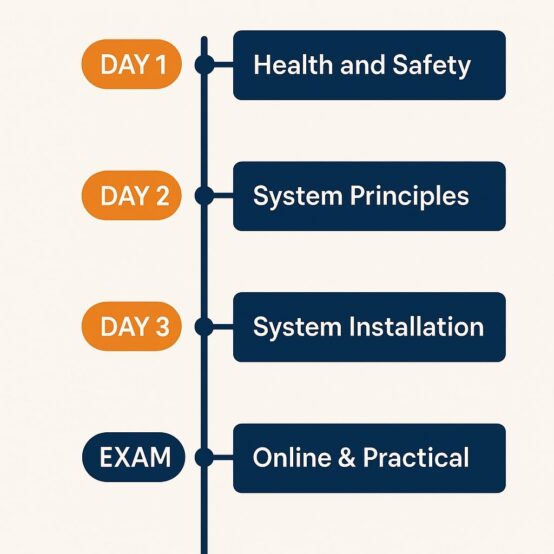
- Professional Installer Courses (Level 3): Typically 3 days for experienced HVAC, plumbing, or heating engineers.
- New Entrant Pathways: Longer training routes for those without industry experience, often combined with on-site, supervised work under an MCS-certified company.
Delivery Methods
Different training providers offer flexible learning pathways:
- In-Person: The most common method, allowing direct interaction with trainers and full access to live equipment.
- Online Modules: Some providers deliver theory-based units (e.g., heat loss calculations, design) online for flexible study.
- Blended/Hybrid Learning: Combines online learning for theory with in-person workshops for practical skills, providing the best of both worlds.
Who Should Take The Air Source Heat Pump Course?
Training courses for air source heat pumps (ASHPs) are designed to suit a wide range of learners from complete beginners to experienced professionals in the heating and renewable energy industries. The right pathway depends on your current qualifications, career stage, and long-term goals.
For Professionals in Plumbing, Heating, or Renewable Energy
This group makes up the primary audience for most ASHP certification courses.
- Prerequisites: Typically, you’ll need a recognised trade qualification such as an NVQ Level 2 or 3 in Plumbing or Heating and Ventilation, or a valid Core Domestic Gas Safety (CCN1) certificate.
- Course Focus: Training builds on your existing knowledge by covering system design, installation standards, and maintenance procedures specific to ASHPs.
- Outcomes: On completion, you can gain industry-recognised qualifications such as the Level 3 Award in Heat Pump Systems, accredited by the Microgeneration Certification Scheme (MCS). This allows you to install systems that qualify for grants such as the UK Boiler Upgrade Scheme, giving your customers financial support while boosting your professional credibility.
For Beginners and New Entrants
If you’re new to the heating industry, you’ll follow a more structured pathway before becoming a certified installer.
- Required Experience: Short awareness courses are available, but to become certified, you usually need at least six months of supervised, verifiable work with an MCS-certified company.
- Apprenticeships: The Level 3 Advanced Apprenticeship for Low Carbon Heating Technicians is a formal route into the industry, combining training with real-world experience.
- Foundation Courses: Some providers offer packages that teach basic plumbing and heating skills alongside ASHP training, preparing complete beginners for entry-level roles.
- Government Support: While the Heat Training Grant mainly targets existing heating engineers, additional support may be available for apprentices and career changers.
For Advanced Learners and Specialists
For experienced engineers, advanced courses focus on complex system design and niche applications.
- Complex Design: Training in optimisation, efficiency tuning, and large-scale installations for commercial or industrial settings.
- Special Applications: Retrofitting heat pumps into older or poorly insulated buildings, or working with hybrid heating systems.
- Manufacturer Training: Many ASHP manufacturers offer their own training programmes, giving installers in-depth product expertise, extended warranties, and access to exclusive technical support.
For Homeowners and Self-Installers
While ASHP courses are not designed for DIY installation, homeowners can still benefit from awareness-level training.
- Certification Rules: To access government grants such as the Boiler Upgrade Scheme, systems must be installed by an MCS-certified professional — DIY installations do not qualify.
- Legal Restrictions: Handling refrigerants in split systems requires F-Gas certification, which homeowners cannot obtain without formal training.
- Risks & Costs: DIY installation risks poor performance, invalid warranties, and higher long-term costs due to errors.
- Recommended Path: Homeowners can take short awareness courses to understand ASHP technology better, helping them make informed decisions when hiring certified professionals.
Certifications and Accreditation of Air Source Heat Pump
In the UK, certifications and accreditations are essential for air source heat pump (ASHP) installers. They demonstrate technical competence, build customer trust, and — crucially — ensure that installations qualify for government-backed funding schemes such as the Boiler Upgrade Scheme.
The most important accreditation is the Microgeneration Certification Scheme (MCS), which acts as the gold standard for renewable heating quality assurance.
Recognised Qualifications in the UK
Microgeneration Certification Scheme (MCS)
- Purpose: Certifies both installers and products, ensuring compliance with high technical standards.
- Why It Matters: Required for homeowners to claim government grants (e.g., Boiler Upgrade Scheme).
- Requirements: Installers must hold a recognised Level 3 qualification (e.g., from LCL Awards or BPEC) and pass an MCS assessment, which includes on-site inspections and technical interviews.
City & Guilds and BPEC
- Role: Awarding bodies offering qualifications recognised for MCS accreditation.
- Key Qualification: Level 3 Award in the Installation, Commissioning, and Maintenance of Air Source Heat Pump Systems.
- Prerequisites: Typically requires:
- NVQ Level 2 or 3 in Plumbing or Heating.
- WRAS Water Regulations Certificate.
- In some cases, an Unvented Hot Water Systems Certificate.
LCL Awards
- Role: Provides industry-recognised Level 3 heat pump qualifications aligned with MCS.
- Content: Covers the core heat pump unit and a specific air source unit, with focus on non-refrigerant circuits.
NICEIC
- Role: Best known for electrical certification, but also provides ASHP training.
- Certification: Issues Certificates of Competence for air and ground source heat pumps, which can be used as evidence for MCS installer scheme applications.
F-Gas Certification
- Legal Requirement: Mandatory for anyone installing or maintaining split-system heat pumps, where refrigerants are handled on-site.
- Qualification: City & Guilds 2079 F-Gas is the standard certificate.
- Note: Not required for monobloc systems, as refrigerant circuits are factory-sealed.
Exam Structure and Assessment Methods
Professional ASHP qualifications, particularly Level 3 courses, use both theory and practical assessments to confirm competency.
Theory Assessment
- Format: Closed-book, multiple-choice tests (often online, e.g., City & Guilds e-volve platform).
- Content: Principles of heat pumps, system design, regulations, and safety.
- Grading: Pass/fail with a defined threshold.
Practical Assessment
- Format: Hands-on demonstrations using live or simulated ASHP rigs.
- Tasks: Installation, commissioning, servicing, and fault-finding.
- Verification: Internally marked by the training centre, with external moderation to ensure consistency.
The Value of Certification
Holding the right certifications provides tangible benefits for installers:
- Compliance with Standards: Ensures work meets rigorous industry regulations.
- Customer Confidence: Certification builds trust by proving technical competence and reliability.
- Access to Government Incentives: MCS certification is mandatory for customers to access grants and rebates.
- Career & Business Growth: Certified installers are in high demand, with expanded opportunities across the renewable heating market.
Skills and Tools You Will Learn about Air Source Heat Pump
Professional air source heat pump (ASHP) training courses provide technicians with the practical skills, technical knowledge, and specialist tools required to design, install, maintain, and certify systems to UK industry standards. Training ensures participants are not only able to install units but also optimise performance, ensure compliance, and build customer trust.
Installation and Troubleshooting
Hands-on training is a core part of every ASHP course, giving learners the ability to work confidently with live systems.
- Site Assessment: Conduct technical surveys, calculate heat loss, and size the correct ASHP and associated components for a property.
- System Design: Learn how to integrate monobloc and split systems with various heating setups, including radiators, underfloor heating, and hybrid systems.
- Physical Installation: Practical training in correct positioning of indoor and outdoor units, as well as plumbing and electrical integration.
- Commissioning: Set up and test systems to verify they meet manufacturer specifications and are running at peak efficiency.
- Fault-Finding & Maintenance: Diagnose common problems such as low water pressure, blockages, or electrical faults, and carry out servicing to ensure long-term reliability.
- Tooling: Training on specialist equipment, including refrigerant handling tools (for split systems), pressure testing kits, and advanced diagnostic tools.
Energy Efficiency Calculations
ASHP efficiency is one of its key benefits, and installers must be able to demonstrate and optimise performance.
- Coefficient of Performance (COP): Learn to calculate the ratio of heat output to electricity input, providing an instant measure of system efficiency.
- Seasonal COP (SCOP): Understand how efficiency changes with weather and seasonal conditions, offering a more accurate annual performance rating.
- Comparative Analysis: Develop skills to compare ASHP running costs and efficiency with gas boilers and other traditional heating systems.
- Performance Optimisation: Learn adjustment techniques to improve efficiency based on building insulation levels, system design, and climate conditions.
Regulatory Compliance
Compliance is essential for both legal operation and ensuring customers can access government incentives. Training covers:
- MCS Certification Requirements: How to meet the standards of the Microgeneration Certification Scheme, the benchmark accreditation for UK installers.
- F-Gas Regulations: For split-system installations, training includes legal obligations for refrigerant handling, alongside the process of obtaining an F-Gas certificate.
- Building Regulations: Ensuring installations meet relevant UK building codes, particularly regarding safety, energy efficiency, and emissions reduction.
- Health & Safety: Practical training in risk assessments, safe working practices, and compliance with workplace regulations.
- Record Keeping: Instruction on documentation, including handover packs, commissioning certificates, and system specifications, is essential for customer assurance and compliance audits.
Career Opportunities After Completing the Air Source Heat Pump Course
Completing an air source heat pump (ASHP) course opens the door to a wide range of career opportunities in the renewable heating and low-carbon energy sector. With strong government backing and growing homeowner demand for energy-efficient heating, certified ASHP specialists are in high demand.
Installer
- Role: Install, service, commission, and maintain ASHP systems in homes and commercial buildings.
- Outlook: One of the fastest-growing roles in the UK renewable energy sector. Installers accredited under the Microgeneration Certification Scheme (MCS) are particularly sought after, since government grants such as the Boiler Upgrade Scheme require MCS-certified installers.
- Earning Potential: Competitive starting salaries, with scope for higher earnings as experience grows. Many installers move on to run their own businesses.
Renewable Energy Consultant
- Role: Advise homeowners, housing associations, and developers on integrating ASHPs into their energy strategies.
- Skills: Strong grasp of ASHP technology, energy efficiency calculations, regulatory frameworks, and funding options.
- Responsibilities: Assess building energy needs, recommend ASHP solutions, and guide clients through grant and subsidy applications.
- Pathway: An ASHP course provides the foundation, with further training in sustainability and energy consultancy recommended for career advancement.
HVAC Technician
- Role: Expand your HVAC expertise to include renewable heating technologies.
- Value: An ASHP qualification future-proofs your career by positioning you in the green building sector, where demand for renewable heating engineers continues to grow.
- Prospects: HVAC professionals who add ASHP training to their portfolio are more competitive in tenders and more attractive to employers.
Entrepreneurial Opportunities
- Role: Start and grow your own ASHP installation and maintenance company.
- Path: With the right certifications and business knowledge, you can offer full installation services, hire apprentices, and expand into consultancy or hybrid renewable energy solutions.
- Advancement: Experienced installers can move into supervisory or management roles, or leverage expertise to win larger contracts in housing developments and commercial projects.
Continuing Education & Training Roles
- Mentorship: Experienced engineers can mentor apprentices and new entrants, helping build the future low-carbon workforce.
- Teaching & Training: ASHP expertise is valuable for those pursuing teaching careers at colleges, vocational centres, or manufacturer training programmes.
- Further Study: Heat pump training can also lead into advanced renewable technologies, such as hybrid systems, district heating, and ground source heat pumps.
Summary of Career Paths
Career Path | Description | Key Skills & Knowledge | Outlook |
ASHP Installer | Install, commission, and maintain heat pump systems. | System design, installation, diagnostics, MCS compliance. | High demand due to net-zero targets and grants. |
Renewable Energy Consultant | Advise clients on adopting ASHPs and other low-carbon tech. | Efficiency calculations, regulatory expertise, client advisory. | Growing, especially in housing and sustainability. |
HVAC Technician | Expand into renewable heating within the HVAC industry. | ASHP integration, plumbing, electrical and general HVAC skills. | Strong demand; transition to green heating. |
Entrepreneur | Run your own ASHP installation/maintenance business. | Installer skills plus business management and customer service. | High earning potential and career progression. |
Trainer/Educator | Mentor apprentices or teach ASHP skills at training centres. | Advanced system knowledge, teaching or mentorship skills. | Growing demand as workforce expands. |
Cost, Duration, and Enrolment Process of Air Source Heat Pump
Before enrolling in an air source heat pump training course, it’s important to understand the likely costs, time commitment, and financial support available.
Average Fees
- Professional Level 3 ASHP Installer Courses (covering installation, commissioning, and maintenance) typically cost £500–£700 + VAT.
- Costs vary depending on the provider and whether the course includes additional certifications, such as Water Regulations (WRAS) or Unvented Hot Water Systems.
- Some centres offer bundled packages, combining prerequisites and the ASHP qualification at a reduced rate.
Course Duration
- Experienced heating and plumbing engineers can usually complete a Level 3 course in 3 days of in-person, centre-based training.
- Duration may vary depending on prior qualifications and practical experience.
- New entrants typically follow longer pathways, often including apprenticeships or extended training with supervised work placements.
Financing and Grant Options
Heat Training Grant
- Value: Up to £500 discount on eligible ASHP training.
- Eligibility: Applicants must either:
- Work for a business with 250 or fewer employees,
- Be a sole trader, or
- Be unemployed.
They must also be registered with a competent person scheme for heating and hot water.
- Application: The grant is applied directly as a discount when booking through participating providers. Some centres have offered free courses by combining the grant with additional funding.
Manufacturer Discounts
- Leading manufacturers (e.g., Baxi, Daikin) provide financial incentives such as product vouchers, discounts, or subsidised training places.
0% Finance
- Training centres like Logic4training allow learners to spread course costs with interest-free finance plans.
How to Enrol in an ASHP Course
- Check Prerequisites: Ensure you meet entry requirements, typically:
- A WRAS Water Regulations Certificate.
- A recognised heating or plumbing qualification (NVQ Level 2/3 or equivalent).
- Choose a Provider: Find an MCS-accredited training centre offering Level 3 ASHP qualifications, such as those from LCL Awards or BPEC.
- Confirm Grant Eligibility: If based in England, ask your training provider whether they are part of the Heat Training Grant scheme and confirm your eligibility.
- Book Your Course: Most providers allow booking online or by phone. Grants and discounts are usually applied at checkout.
- Attend and Complete Training: Take part in in-person workshops and assessments, covering both theory and practical skills.
- Gain Certification: Once passed, you’ll receive a recognised Level 3 qualification, which can be used as part of an MCS installer accreditation application.
Take the next step in your career and become an expert in energy-efficient heating solutions. Contact a reliable training provider to enrol in the Air Source Heat Pump course and be part of the sustainable energy revolution.
Alternatives and Related Training Paths of Air Source Heat Pump
Expanding your expertise beyond air source heat pumps (ASHPs) can significantly boost your career in the renewable heating and energy sector. By pursuing related training, you can serve a wider range of customers, increase your earning potential, and future-proof your career as demand for low-carbon technologies continues to grow.
Ground Source Heat Pump (GSHP) Training
- Technology Difference: Unlike ASHPs, which extract heat from the air, GSHP systems harness stable underground temperatures through buried pipework.
- Complementary Skills: The principles are similar, so many providers (e.g., Logic4training) offer GSHP top-up courses for qualified ASHP installers.
- Market Application: Ideal for rural properties, large homes, and new builds where groundworks are possible.
- Career Value: Although GSHPs involve higher installation costs, they deliver greater long-term efficiency and allow installers to take on larger, higher-value projects.
Solar Panel (PV) Technician Certification
- Integrated Solutions: Pairing solar PV systems with ASHPs allows homeowners to generate their own electricity to power heat pumps, creating near carbon-neutral heating and cooling systems.
- Market Growth: The UK solar market is expanding quickly, with strong demand for qualified technicians. Certifications from bodies like ETA International or UK equivalents demonstrate competence.
- Business Advantage: Offering both ASHP and PV services enables you to design and install complete renewable energy packages, while also diversifying revenue streams through standalone solar projects.
General HVAC Training
- Foundational Knowledge: General HVAC (Heating, Ventilation, and Air Conditioning) training provides a grounding in thermodynamics, refrigeration cycles, and electrical systems.
- Career Entry Point: Many new entrants begin with a general HVAC qualification (via apprenticeships or vocational colleges) before specialising in renewable technologies like ASHPs or GSHPs.
- Flexibility: Broad HVAC skills keep career options open across traditional heating systems, air conditioning, and renewable technologies, making it a strong starting point for those entering the industry.
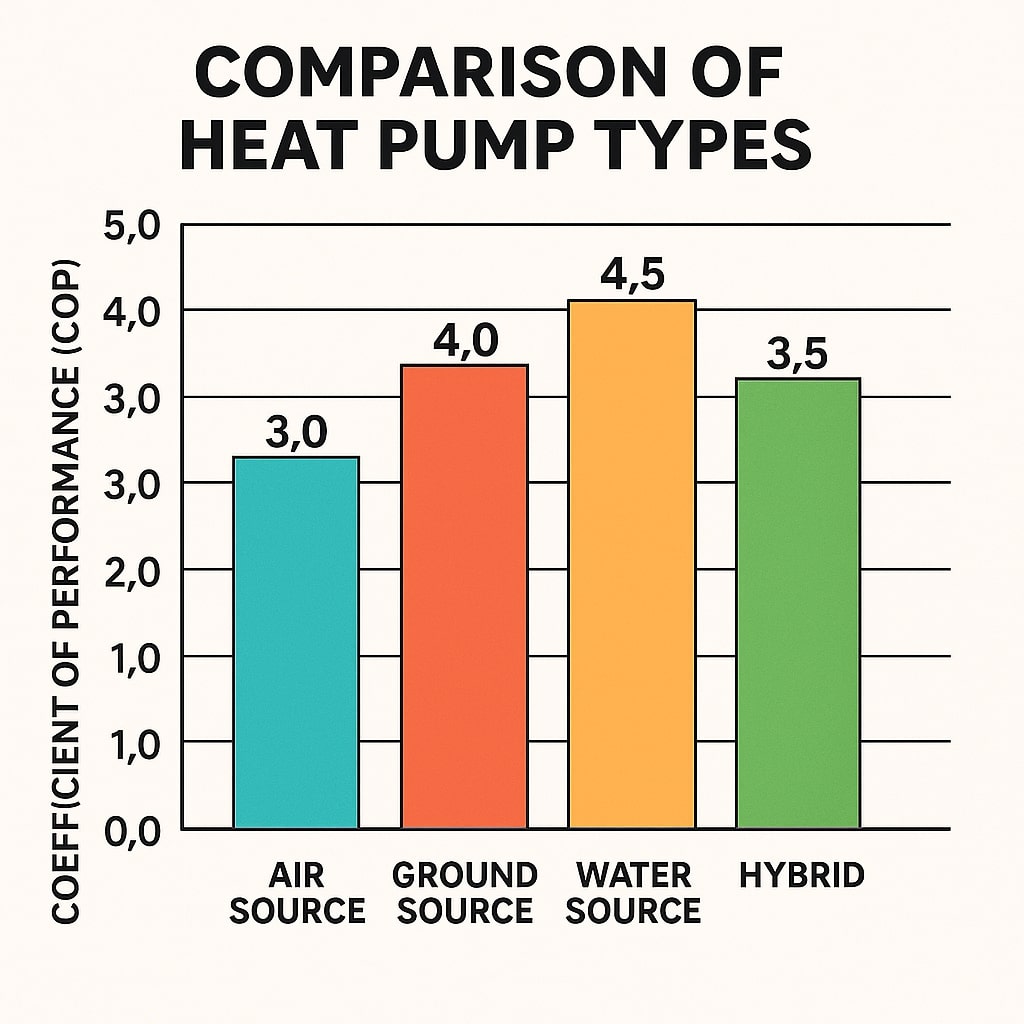
Summary of Related Training Paths
Training Path | Key Benefits | Target Market |
Ground Source Heat Pump (GSHP) | Offers higher efficiency, serves rural and large properties, and expands into higher-value projects. | Large homes, rural properties, new builds with outdoor space. |
Solar Panel (PV) Technician | Enables integrated renewable packages (PV + ASHP), diversifies business income. | Homeowners and businesses seeking self-generation and lower bills. |
General HVAC Training | Builds a strong foundation in heating, cooling, and ventilation. | New entrants and professionals broadening their technical skills. |
FAQs about Air Source Heat Pump
To install air source heat pumps in the UK, you typically need an NVQ Level 2 or 3 in Plumbing or Heating and Ventilation, as well as a WRAS Water Regulations certificate and Part L Energy Efficiency qualification. For MCS accreditation, further training in heat pump systems is also required.
To become a heat pump installer, you need to complete a certified training course such as the BPEC Level 3 Award in the Installation and Maintenance of Heat Pump Systems, usually aimed at qualified heating engineers or plumbers.
The cost of a heat pump installation course ranges between £500 and £1,200, depending on the training provider, duration, and whether it includes accreditation preparation such as MCS or BPEC.
Training to become a heat pump installer typically takes 2 to 5 days, depending on your existing qualifications and the depth of the course.
The Level 3 ASHP course refers to the Level 3 Award in the Installation and Maintenance of Air Source Heat Pumps, designed for qualified heating engineers. It covers system design, installation, commissioning, and servicing in compliance with industry standards.
The BPEC ASHP course is a Level 3 accredited qualification covering the installation and maintenance of air source heat pumps. It includes both theoretical and practical components, aligned with MCS and industry best practices.
To service air source heat pumps, you need a relevant Level 3 qualification, such as the BPEC course, and should hold prior plumbing or heating certifications like an NVQ Level 2/3. You may also require F-Gas certification for refrigerant handling, depending on the system.