Plumbing is a good UK career for people who accept physical work and call-out hours. Employed plumbers earn between £33,000 and £38,000 a year on average, and pay rises with experience, qualifications and specialist skills. Location, employment type and the kind of work also shape income. Customers pay separate hourly and daily rates, and these charges are not wages. Self-employed plumbers cover tools, insurance, travel, materials and tax from them.
Long-term demand is strong, driven by a skills shortfall, new housing and low-carbon heating, while short-term work follows the construction market. The trade offers practical problem-solving and a clear route into self-employment. It also brings physical strain, irregular hours and income that varies with workload. Plumbing suits people who enjoy hands-on work and can manage lower pay during training. People who want a fixed 9-to-5 desk routine will find it a poor fit.
Table of Contents
How Much Do Plumbers Earn in the UK?
A full-time employed plumber in the UK earns between £33,000 and £38,000 a year on average. Experience, location, qualifications and type of work move a plumber’s pay within and beyond that range. Plumbers in higher-paying regions or in gas and heating work earn more.
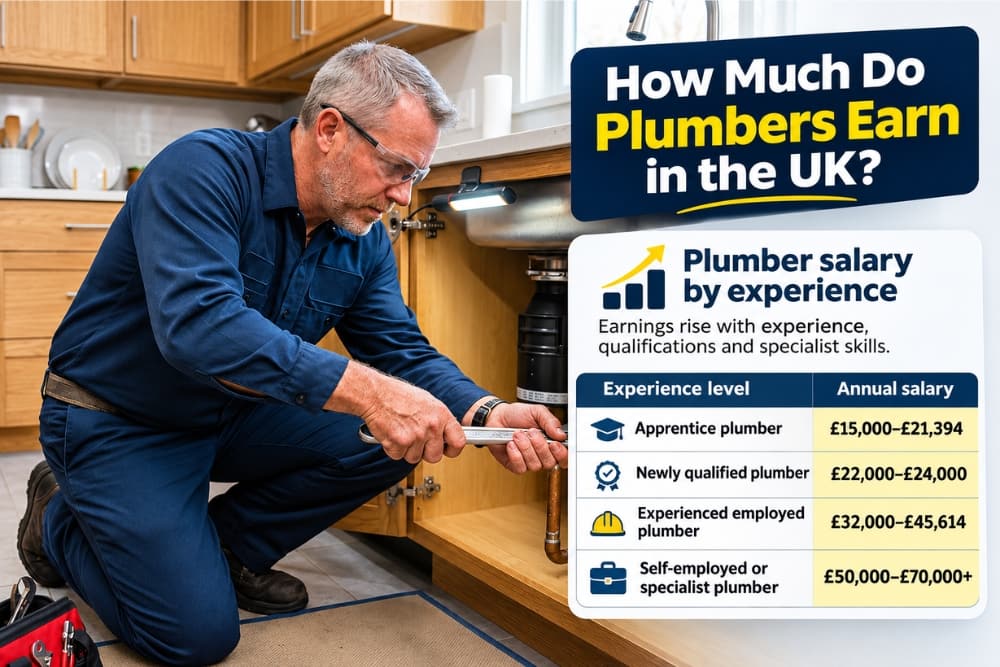
Plumber salary by experience
Earnings rise with experience, qualifications and specialist skills. The table below shows typical annual pay at four career stages.
Experience level | Annual salary |
Apprentice plumber | £15,000–£21,394 |
Newly qualified plumber | £22,000–£24,000 |
Experienced employed plumber | £32,000–£45,614 |
Self-employed or specialist plumber | £50,000–£70,000+ |
Senior employed plumbers earn around £46,000 or more. Some highly experienced self-employed plumbers and specialist gas engineers earn £80,000 or more, depending on workload, services and business performance. Pay climbs most steeply after qualification, and self-employed income varies the most.
What Factors Affect a Plumber's Salary in the UK?
6 factors shape plumber pay: experience, qualifications, specialist skills, location, employment type and type of work.
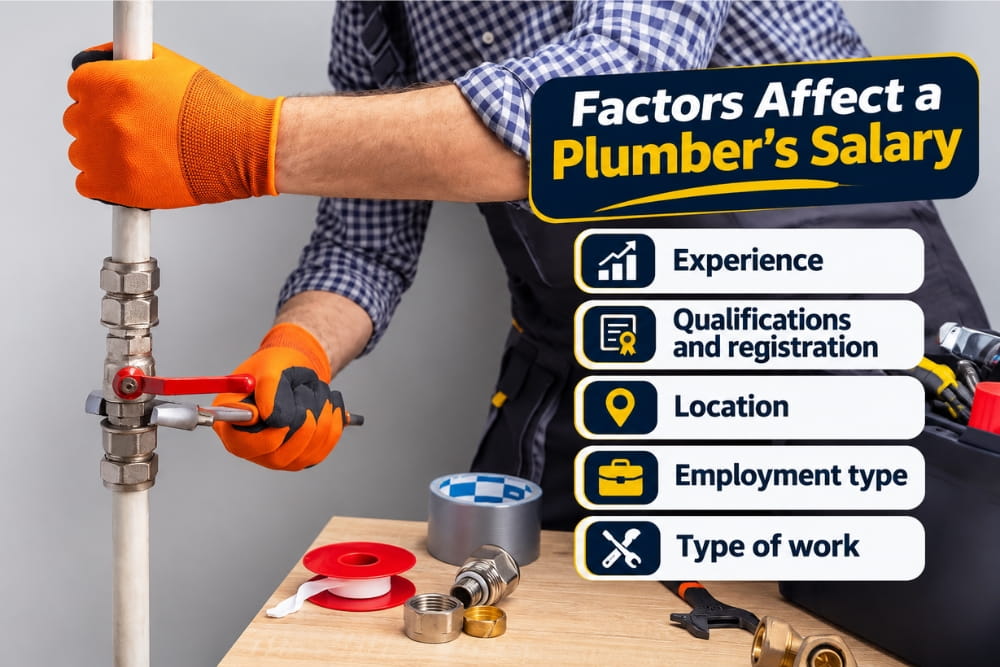
- Experience: Newly qualified plumbers have less practical experience than established ones. Fault diagnosis, complex installations and independent working raise earning power.
- Qualifications and registration: Relevant qualifications widen access to jobs. Domestic gas work requires Gas Safe registration.
- Specialist skills: Heating systems, gas engineering, renewable technologies and complex pipework lead into specialist roles.
- Location: Pay and customer rates differ between regions. London and other high-cost areas tend to support higher rates, but expenses rise too.
- Employment type: Employed plumbers receive an agreed salary or wage. Self-employed plumbers set their own prices, carry business costs and find their own customers.
- Type of work: Emergency repairs, specialist installations and larger projects attract higher charges than routine maintenance.
What Do Customers Pay Plumbers?
Customer charges are not plumber wages. Each charge covers the plumber’s time and, for self-employed plumbers, tools, insurance, travel, materials and tax.
Hourly rates
Standard plumbing work costs £40 to £60 an hour, averaging around £50. Emergency call-outs cost £75 to £150.
Type of plumbing work | Typical hourly rate |
Standard plumbing work | £40–£60 |
Emergency plumbing work | £75–£150 |
Emergency work carries the highest hourly charge.
Daily rates
Daily rates range from £180 to £400, depending on experience, location and job type. Complex or specialist work costs up to £700.
Type of plumbing work | Typical daily rate |
Standard work | £180–£350 |
Experienced or self-employed plumber | £350–£400 |
Complex or specialist work | Up to £700 |
Self-employed plumbers pay for tools, insurance, travel, materials and tax out of these charges. Daily rates are therefore not take-home earnings.
Note: Figures are estimates. Rates shift with location, demand and market conditions.
Is There a High Demand for Plumbers in the UK?
Long-term demand for plumbers in the UK is strong, while short-term demand follows the construction market. Five drivers sustain the long-term picture.
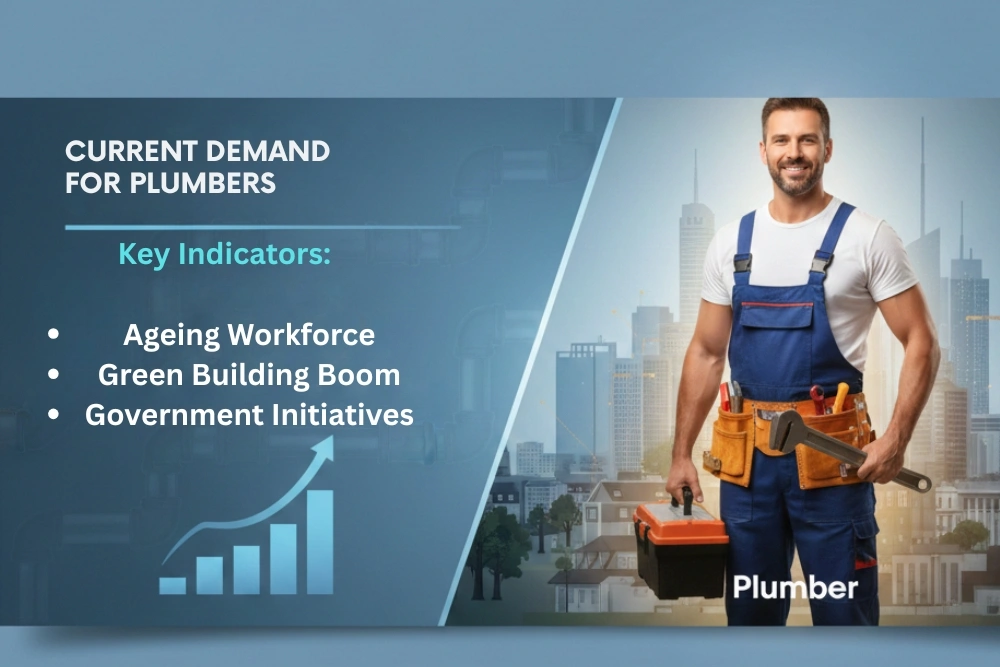
- Skills shortfall: The UK Trade Skills Index 2023 estimates that 73,700 additional plumbers are required by 2032. The gap opens opportunities for new entrants and experienced plumbers alike.
- Hiring difficulty: A Markel Direct study reported that 46% of UK homeowners struggled to hire a tradesperson for projects or repairs. Plumbing was the most searched-for trade in 44 of the 46 cities analysed.
- Housing targets: The Government’s target of 1.5 million new homes raises demand for construction skills. New homes need pipework, bathrooms, water systems and heating installations.
- Low-carbon heating: The shift to low-carbon heating creates demand for plumbers with updated skills. The Government has stated that the heat pump installation workforce needs to grow from around 4,000 full-time equivalent installers to approximately 12,000 by 2030.
- Maintenance and emergency repairs: Leaking pipes, blocked drains, faulty boilers, frozen pipes and heating failures generate planned work and urgent call-outs all year.
Career Progression Opportunities for Plumbers
Plumbers progress into six main roles through experience and further training.
- Heating engineer: Plumbers build skills in central heating, boilers and hot water systems.
- Gas engineer: Further training and Gas Safe registration qualify a plumber to work on gas appliances and systems.
- Renewable heating specialist: Further training leads to heat pump and other low-carbon heating work.
- Master plumber or specialist contractor: Experienced plumbers focus on complex installations, specialist repairs or larger projects.
- Building services engineer: Some plumbers move into wider roles covering heating, ventilation and water systems.
- Trainer or assessor: Experienced plumbers teach or assess apprentices and trainees.
Supervisory, assessing and specialist roles also offer a route off the tools as physical strain builds over a long career.
What Are the Advantages of Being a Plumber in the UK?
Plumbing offers five main advantages: long-term demand, pay above the UK median, clear training routes, varied hands-on work and a path to self-employment.

- Job security and demand: Every building contains water, heating and waste systems, so plumbing work exists in every part of the country. The trade grew 16% between 2016 and 2026, driven by new homes and ageing systems that need repair. Long-term demand is strong, while short-term work follows the construction market. Repairs and maintenance generate work all year.
- Earning potential: The mean plumber salary is £33,285 a year, above the UK median income of £31,461. Call-outs and gas work raise earnings beyond that figure.
- Training and certification routes: Plumbers train through NVQ Level 2 and Level 3, entering by apprenticeship or a fast-track course. Gas Safe registration qualifies a plumber for gas work, which carries higher pay. The fixed sequence gives new learners a clear order of steps.
- Variety and continual learning: Daily work spans home pipework, large building projects, gas systems, heating units, green technology and safety checks. New equipment, such as smart heating controls and water-saving fittings, requires updated skills, and short courses keep qualifications current. This mix suits people who prefer active work to desk work.
- Self-employment and progression: Experienced plumbers start their own firms, offering emergency call-outs, planned installations or niche services. Self-employment gives control over workload and job types, while the plumber carries the business costs. Employed, self-employed and sub-contract arrangements give different levels of control over hours. Extra skills in unvented hot water systems, large sites and water regulations open advanced roles.
What Are the Disadvantages of Being a Plumber?
Plumbing carries six drawbacks: physical strain, irregular hours, tough working conditions, a long training period, business duties and variable income.
- Physical demands: Plumbers lift equipment, work in confined spaces, kneel and stand for long periods.
- Irregular hours: Emergency repairs bring evening, weekend and bank holiday work.
- Challenging environments: Work takes place outdoors, at height and in damp, dirty, cramped spaces.
- Training requirements: Building technical skills and gaining qualifications takes time and commitment.
- Business responsibilities: Self-employed plumbers manage enquiries, quotes, invoices, insurance, tax and operating costs.
- Variable income: Workload and earnings fluctuate, especially for plumbers who rely on their own customer base.
How to Become a Plumber in the UK
Five routes lead into plumbing. The best fit depends on existing experience, qualifications and preferred way of learning. For costs, see our guide to plumber training costs.
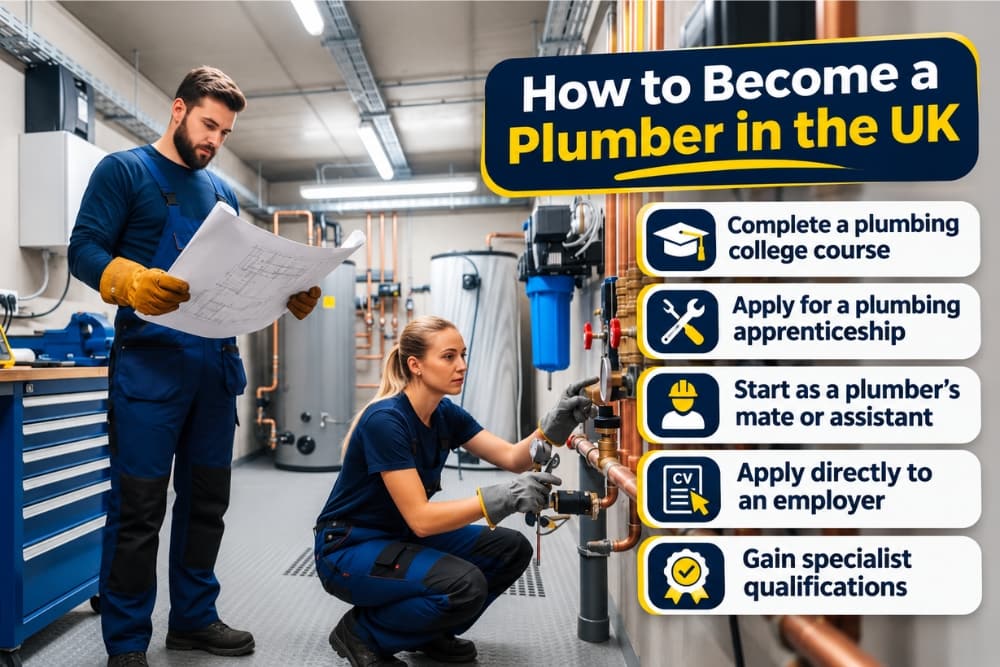
1. Complete a plumbing college course
A college course teaches the basic knowledge and practical skills for plumbing work. Courses cover plumbing studies, domestic heating, pipework, water systems and installation techniques. The qualification supports applications for trainee positions and apprenticeships. See [Internal link: plumbing qualification levels].
2. Apply for a plumbing apprenticeship
An apprenticeship combines paid employment with structured training. Apprentices learn from experienced professionals while working towards a recognised qualification. This route suits people who prefer learning in a real working environment. See [Internal link: plumbing apprenticeship guide].
3. Start as a plumber’s mate or assistant
A plumber’s mate or assistant gains exposure to tools, materials, installation work and everyday site practice. Experience builds while the assistant works towards relevant qualifications.
4. Apply directly to an employer
Some plumbing firms recruit trainees directly. Check local firms’ vacancy pages and enquire about trainee or assistant positions.
5. Gain specialist qualifications
Domestic gas, heating and renewable work need additional training and the appropriate registration or certification. Domestic gas work requires Gas Safe registration. Training and assessment requirements depend on the type of work.
Is Plumbing a Good Career to Start at 40?
Plumbing suits a career changer at 40 who can fund the training period and handle the physical demands. No rule requires a plumber to start straight after school.
Experience in construction, maintenance, engineering or customer service transfers well. A career changer chooses between college courses, apprenticeships and assistant roles.
The main trade-off is income. Pay is lower during training, so the change needs to fit household finances. Self-employment becomes an option once practical experience and the relevant qualifications are in place.
Is Plumbing the Right Career for You?
Plumbing is a good career in the UK for people who enjoy practical problem-solving, accept irregular hours and can manage on lower pay during training. It is a poor fit for anyone who wants a fixed 9-to-5 schedule, desk-based work or a job without physical effort.
Employed plumbers earn between £33,000 and £38,000 a year on average. Experienced and specialist plumbers earn more, while self-employed earnings depend on workload and business costs. Long-term demand is strong, but short-term work follows the construction market. The trade rewards people who value a practical skill with room to specialise, and who can handle the physical demands and the income dip during training.
Frequently Asked Questions (FAQs)
Q: Is plumbing a good career in the UK in 2026?
A: Yes, plumbing is a strong and high-demand career in the UK in 2026, with long-term demand driven by a skills shortfall, new housing and low-carbon heating. Short-term work follows the construction market. The trade also involves physical effort and call-out hours.
Q: Is there enough work for new plumbers in the UK?
A: Yes, there is high demand for new and qualified plumbers in the UK, driven by a skills shortfall, new housing, low-carbon heating and constant repair work. Demand for services does not guarantee work for every new entrant, and workload falls when the construction market slows. Qualifications and specialist skills improve a new plumber’s position.
Q: How much can a self-employed plumber earn in the UK?
A: A self-employed plumber in the UK earns between £50,000 and £70,000 per year, and some highly experienced or specialist plumbers earn £80,000 or more. Earnings depend on workload, services and business performance. Business costs and tax reduce take-home pay.
Q: Is it worth becoming a self-employed plumber in the UK?
A: Yes, becoming a self-employed plumber in the UK can be financially rewarding, because you set your own prices, workload and services. Tools, insurance, travel, materials and tax reduce what you keep, and income varies with your customer base. The route suits experienced plumbers who win steady work.
Q: Is plumbing a physically demanding job?
A: Yes, plumbing is a physically demanding job. Plumbers handle tools, lift equipment, kneel, stand for long periods and work in cramped, damp or dirty spaces, sometimes outdoors or at height. Supervisory, assessing and specialist roles offer a route off the tools later in a career.
Q: Do plumbers have a good work-life balance?
A: Whether plumbers have a good work-life balance depends on the type of work and the employment type. Employed plumbers on standard hours keep regular schedules. Emergency call-outs and self-employment bring evening, weekend and bank holiday work. Self-employed plumbers set their own workload, but customer demand and administration shape their time.
Q: Do plumbers work weekends and bank holidays?
A: Yes, emergency and 24/7 plumbers do work weekends and bank holidays, while standard residential and construction plumbers usually do not. Emergency work carries higher charges, at £75 to £150 an hour. Call-out arrangements decide a plumber’s hours.
Q: Is it difficult to get a plumbing apprenticeship in the UK?
A: Getting a plumbing apprenticeship in the UK can be very competitive and challenging, because places depend on employers willing to hire and train. A college qualification, relevant experience or work as a plumber’s mate strengthens an application. Other routes exist when an apprenticeship is unavailable.
Q: Can you become a plumber in the UK without an apprenticeship?
A: Yes, you can become a plumber in the UK without a traditional apprenticeship. Common alternatives are a college course, work as a plumber’s mate or assistant, and direct applications to employers for trainee positions. Domestic gas work requires Gas Safe registration, whichever route you take.