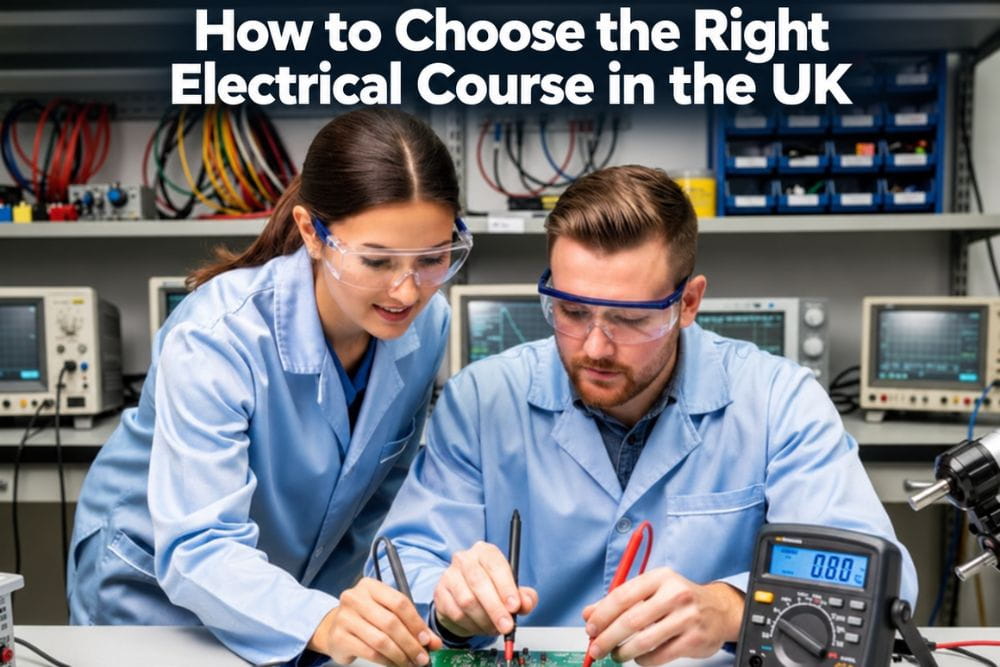
The Electrical Inspection and Testing Course (City & Guilds 2391-52) is a top qualification for electricians in London. It shows you can inspect, test, and certify electrical installations safely. The course teaches how to make sure systems follow BS 7671 Wiring Regulations and stay safe over time. You will learn both theory and practical skills for testing, fault finding, and certification.
With flexible training options and strong career benefits, this guide explains what the course covers, how it is assessed, and the skills and qualifications you will gain to grow your career in electrical inspection and testing.
What Is an Electrical Inspection and Testing Course?
An electrical inspection and testing course is a qualification for electricians who want to check that electrical systems are safe and meet UK rules. The course teaches how to inspect and test installations following BS 7671 IET Wiring Regulations. It covers how to carry out safety checks, use test tools, record results, and complete Electrical Installation Condition Reports (EICRs).
In the UK, the City & Guilds 2391-52 course is the main qualification. It gives both inspection and testing skills needed to meet national electrical safety standards.
Why Is Inspection and Testing Important for Electricians?
Inspection and testing keep electrical systems safe and working properly. Electricians do these checks to meet UK law, protect people, and build trust with clients.
- Safety and accident prevention: Testing spots faults and unsafe wiring early. These checks stop electric shocks, fires, and other dangers.
- Legal and insurance compliance: Testing meets the rules in the Electricity at Work Regulations 1989 and the Health and Safety at Work Act 1974. Regular tests prove that systems are safe and follow building rules.
- Secure insurance: Most insurers ask for a valid Electrical Installation Condition Report (EICR). Without one, claims after an electrical fire or fault may be refused.
- Reliability and efficiency: Testing makes sure each circuit works as it should. It helps prevent faults and keeps equipment running well.
- Professionalism and business reputation: Doing inspection and testing shows skill and care. It builds trust and keeps a good name for your business.
- Performance and cost: Regular checks stop costly repairs and reduce downtime. They keep systems efficient and save money over time.
City & Guilds 2391-52 — The Core Electrical Inspection and Testing Qualification
The City & Guilds 2391-52 is a Level 3 electrical inspection and testing course for qualified electricians. It teaches how to inspect, test, and certify both new and existing electrical systems. The course follows the BS 7671 Wiring Regulations, helping electricians meet the latest UK safety standards.
This qualification replaces the old 2394 and 2395 courses. It offers one clear route to gain both initial verification and periodic inspection skills. The award is recognised across the UK as the key qualification for professional inspection and testing work.

What the Qualification Covers
The 2391-52 course gives the practical skills and knowledge needed to test and certify electrical systems safely. It covers five main areas:
- Initial Verification: Checks new electrical installations and circuits to confirm they are safe and match design plans.
- Periodic Inspection: Covers the inspection, testing, and reporting of existing systems to ensure ongoing safety and performance.
- Certification: Teaches how to complete all certificates and reports correctly to meet UK wiring regulations.
- Practical Skills: Builds confidence in using test instruments for continuity, insulation resistance, polarity, and disconnection times.
- Regulatory Compliance: Explains the rules in IET (Institution of Engineering and Technology) Guidance Note 3 and BS 7671, helping electricians meet current legal and safety standards.
Who It Is For
This qualification is for experienced electricians who already have strong installation skills. It suits those who want to:
- Move into a Qualifying Supervisor (QS) role.
- Join a competent person scheme such as NICEIC (National Inspection Council for Electrical Installation Contracting), NAPIT (National Association of Professional Inspectors and Testers), or ELECSA.
- Carry out inspection and testing work independently.
If you already work in the trade and want to boost your credibility, this course provides the recognised qualification to do so.
Entry Requirements
Before starting the City & Guilds 2391-52 electrical inspection and testing course, learners should have:
- A Level 3 electrotechnical qualification such as an NVQ (National Vocational Qualification) Level 3 or equivalent.
- Practical experience in electrical installation and testing.
- Knowledge of fault finding, certification, and report writing.
- Familiarity with BS 7671 Wiring Regulations and IET Guidance Note 3.
The 18th Edition (2382) qualification is strongly recommended, as the course and exams refer to the latest wiring regulations.
How the Qualification Is Assessed
Assessment ensures learners can apply both theory and practice to real electrical work. It includes:
- Practical Assessment: A hands-on test to show skill in inspecting and testing electrical circuits and systems.
- Online Exam: A 120-minute, 60-question, open-book multiple-choice test with a 75% pass mark. It checks the theoretical understanding of inspection and testing.
- Written Assignment: An 80-minute written task with four scenario-based questions testing knowledge of inspection and fault diagnosis.
These assessments reflect real site conditions, ensuring each electrician can perform safely and correctly.
What You Will Learn
During the City & Guilds 2391-52 electrical inspection and testing course, learners gain the confidence to carry out inspection and testing tasks safely, efficiently, and in line with UK standards.
You’ll cover:
- The requirements for inspecting and testing electrical installations, including how to identify defects and ensure compliance.
- Safety management procedures for inspection and testing, focusing on risk control and safe isolation.
- Inspection and testing techniques as defined in BS 7671 (IET Wiring Regulations) and IET Guidance Note 3 (https://en.wikipedia.org/wiki/BS_7671).
- How to complete certification and reports professionally, including Electrical Installation Certificates (EICs) and Electrical Installation Condition Reports (EICRs).
By completing this qualification, you’ll have the technical expertise and confidence to inspect, test, and certify electrical installations to the highest professional standard.
Course Duration and Training Options for Electrical Inspection and Testing Course
- 5 days: The City & Guilds 2391-52 inspection and testing course usually takes 5 days. It includes classroom theory, guided practice, and the final assessment. Everything is covered in one structured timetable.
- 5.5 to 7 days: Some centres run the course for 5.5 or 7 days. This gives more time for fault-finding and extra hands-on practice before the practical exam. These longer courses may also include short online study sessions to help you prepare in advance.
- Online with practical: Many approved UK centres offer blended learning. You study about 30 hours online and then attend a 4-day practical session in person. This flexible option is ideal for working electricians who need to train while keeping up with their job. It still meets all City & Guilds standards.
Electrical Inspection and Testing Course Costs and Training Centres in London
The cost of a Level 3 Electrical Inspection and Testing course (City & Guilds 2391-52) in London ranges from £595 to £1,800. Prices vary by provider, course length, and if exam fees are included. Training centres such as Alpha Building Services Engineering run these courses in classroom, online, and blended formats.
Most courses last 5 to 7 days. Many centres also offer weekend or evening options to help working electricians. All training follows BS 7671 IET Wiring Regulations to ensure safe and compliant learning.
Career Benefits and Recognition
The City & Guilds 2391-52 helps electricians shine. It builds trust and opens doors to more jobs.

- Enhanced job security: Electrical inspection and testing skills are needed across homes, businesses, and industry. Electricians with the City & Guilds 2391-52 are trusted to check work safely. This makes them valuable to UK employers and contractors.
- Increased employability: The qualification is required for many testing and inspection jobs. Companies, housing providers, and building managers hire certified electricians to meet safety rules.
- Higher earning potential: Qualified electricians can offer inspection, testing, and EICR services. This lets them take higher-value jobs and earn more by proving their skills.
- Career progression: The 2391-52 helps electricians move into roles such as Qualifying Supervisor or Electrical Inspector. These positions are well recognised within UK electrical safety work.
- Industry recognition: The qualification meets the technical rules for joining NICEIC, NAPIT, or ELECSA. It also supports applications for the JIB ECS (Joint Industry Board Electrotechnical Certification Scheme) Gold Card, showing full professional competence under UK standards.
Online vs In-Person Electrical Inspection and Testing Training
Training Type | Advantages | Challenges | Best For |
Online Courses | • Learn anytime, anywhere. • Lower cost — no travel or printed materials. • Study at your own speed. • Rewatch video lessons to review key topics. | • Less hands-on experience. • Limited live support. • Online exams can feel strict or technical. | Working electricians who need flexible learning. |
In-person Courses | • Real practice with tools and test gear. • Quick feedback from tutors. • Builds confidence through live demos. • Good chance to meet other electricians. | • Must attend at fixed times. • Travel or accommodation may add cost. | Learners who prefer direct practice and face-to-face teaching. |
Blended Courses | • Combines online study with centre-based practice. • Learn theory online, then test skills in person. • Meets City & Guilds 2391-52 standards. | • Requires both home study and travel for workshops. | Learners who want both flexibility and hands-on sessions. |
Final Thoughts
The City & Guilds 2391-52 Electrical Inspection and Testing Course is a well-known qualification in the UK. It helps electricians show they can test and check electrical systems safely and to the right standard.
For practising electricians, this Electrical Course gives a clear way to build skills and stay up to date with current rules. It strengthens knowledge, adds confidence, and supports safe working. With flexible study choices and national recognition, the 2391-52 is one of the best courses for growing your career in electrical inspection and testing.
Frequently Asked Questions (FAQs)
Q: What is the City & Guilds 2391-52 Electrical Inspection and Testing course?
A: The City & Guilds 2391-52 is a Level 3 qualification for electricians. It teaches how to inspect, test, and certify new and existing electrical installations in line with BS 7671 Wiring Regulations.
Q: Who can take the Electrical Inspection and Testing Course in London?
A: The course is designed for qualified electricians or those with practical installation experience who want to add inspection and testing to their professional skills.
Q: How long does the City & Guilds 2391-52 course take to complete?
A: Most training centres run the course over 5 to 7 days. Some also offer blended options combining online study with a few days of in-person practical sessions.
Q: What career opportunities are available after completing the Electrical Inspection and Testing course?
A: This qualification helps electricians progress to roles such as Qualifying Supervisor, Electrical Inspector, or EICR specialist. It also supports membership with NICEIC, NAPIT, or ELECSA.
Q: How much does the Electrical Inspection and Testing Course cost in London?
A: The cost ranges from £595 to £1,800, depending on the training centre, course format, and whether exam fees are included.
Q: What qualifications do I need for inspection and testing?
A: You’ll need a Level 3 electrical qualification, knowledge of BS 7671 Wiring Regulations, and experience in installation or fault-finding. The City & Guilds 2391-52 is the main qualification required in the UK.