Becoming a plumber requires strong technical skills. These include installing, testing, and repairing water, heating, drainage, and gas systems. Plumbers must work accurately with tools, drawings, and measurements. All work must meet UK building standards to ensure safety and reliability.
Personal skills support the technical work. Problem-solving, adaptability, physical coordination, and clear communication help manage tasks on every site. Safe working habits, attention to detail, and reliability make plumbers trusted by clients and employers.
Improving plumbing skills comes from regular practice and hands-on experience. Focused training on modern systems and learning from experienced professionals strengthens ability. Refining daily workflows ensures work is efficient, safe, and up to code.
Ongoing development keeps plumbers up to date with changing rules and materials. Specialising in energy-efficient or renewable systems prepares plumbers for the growing demand. Continuous learning and skill growth support long-term career success.
What Technical Skills Do You Need to Become a Plumber?
To become a successful plumber, you need technical skills. This includes plumbing installation and troubleshooting, heating system knowledge, drainage and waste systems, gas safety competence, knowledge of building codes, math skills, and tool expertise.
The technical skills needed to become a plumber are listed below:
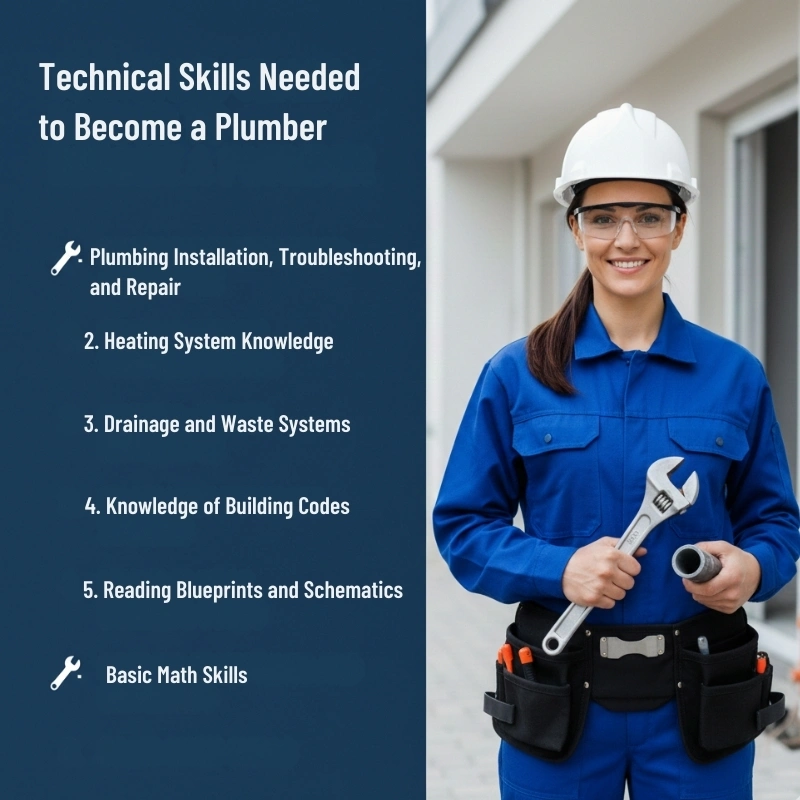
1. Plumbing Installation, Troubleshooting, and Repair
Plumbing installation covers the design and fitting of water and waste systems to approved standards. This work includes pipe materials, sizes, and fittings. Tasks involve cutting, threading, bending, and joining copper, PVC, PEX, cast iron, and steel pipes. Plumbers choose correct fittings and use soldering, solvent welding, or mechanical joints to prevent leaks and pressure loss.
Troubleshooting focuses on finding faults through testing. Plumbers detect leaks, clogs, pressure problems, and faulty fixtures using pressure gauges, flow tests, inspection cameras, and isolation checks. Clear testing reduces downtime and avoids repeat faults.
Repair work restores system function. Tasks include replacing parts, correcting joints, and renewing pipe sections. Safe repair depends on correct materials, pressure control, and compliance with UK Building Regulations Part G.
2. Heating System Knowledge
Heating system knowledge supports safe links between plumbing and heating systems. This skill applies to homes and commercial buildings across the UK.
- Combi, system, heat-only boilers
- Radiator sizing and balancing
- Underfloor heating pipe layouts
- Circulation pumps and valves
- Thermostats and control wiring
- Renewable heat pump connections
Plumbers maintain heating systems connected to the water supply and drainage. Energy Saving Trust data shows heating faults rank among the most common UK household repairs, which increases demand for this skill.
3. Drainage and Waste Systems
Drainage and waste system skills protect hygiene and building safety. This work controls how wastewater and surface water leave a property.
- Soil and waste pipe design
- Venting and air admittance rules
- Underground drainage gradients
- Blockage clearance techniques
- Grease and debris control
Plumbers install and maintain soil stacks, waste runs, and underground drainage. Gradient checks, correct venting, and access points prevent slow flow and bad odours. Errors break Building Regulations Part H and lead to costly repairs.
4. Gas Safety Competence
Gas safety competence is a legal requirement for plumbers working with gas systems in the UK. Gas safe registration confirms training and assessment standards.
Gas work includes pipe sizing, tightness testing, ventilation checks, and combustion testing. Engineers follow Gas Safe rules to control fire and carbon monoxide risk.
Gas pipe installation, appliance connection, leak detection, and emergency isolation form key responsibilities in this area.
5. Knowledge of Building Codes
Knowledge of building codes ensures work passes inspection and protects public health. This skill guides daily decisions on site.
- UK Building Regulations compliance
- Water Regulations and bylaws
- Backflow prevention standards
- Ventilation and discharge rules
- Inspection and certification readiness
Strong code knowledge reduces risk and improves trust. Clients and employers value plumbers who deliver compliant systems without rework.
6. Reading Blueprints and Schematics
Reading blueprints and schematics supports accurate planning before work starts. Drawings show pipe routes, fixture locations, gradients, and system links.
Plumbers read architectural and mechanical plans to avoid clashes with electrical and structural work. Accurate interpretation improves speed, material use, and compliance on small and large projects.
7. Basic Math Skills
Basic math skills support accuracy in planning and costing. Plumbers calculate pipe length, diameter, volume, and flow rate during installation.
Drainage work uses slope ratios, often 1:40 for waste runs under UK guidance. Cost estimates and pressure checks rely on basic arithmetic, algebra, and geometry.
8. Hand and Power Tool Expertise
Hand and power tool expertise supports safe and efficient work on site. Skill with tools improves accuracy and reduces injury risk.
- Pipe cutters, benders, and threaders
- Wrenches, spanners, torque tools
- Drills and core cutting equipment
- Inspection cameras and locators
- Pressure and leak testing tools
Correct tool use increases speed and system quality. Formal training reinforces safety rules when using powered cutting, threading, and welding tools.
What Soft Skills Do You Need to Become a Plumber?
To become a plumber, you need soft skills. This includes problem-solving, flexibility, continuous learning, physical stamina, manual dexterity, time management, customer communication, safety awareness, attention to detail, and reliability.
The soft skills needed to become a plumber are listed below:
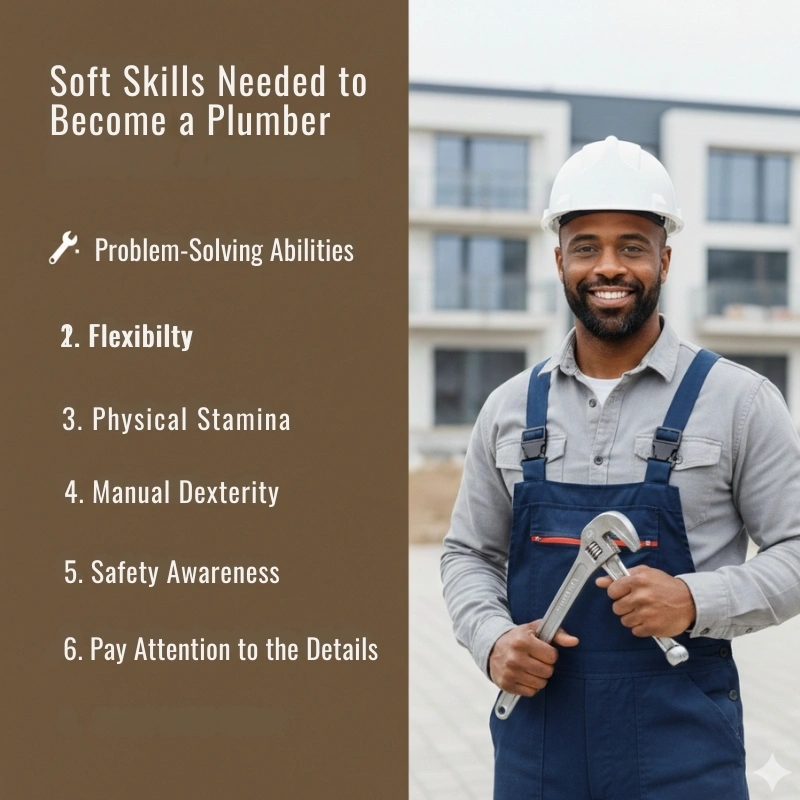
1. Problem-Solving Abilities
Problem-solving abilities allow plumbers to find faults and apply correct solutions. This skill covers fault diagnosis, root cause analysis, and repair selection. Logical thinking supports work on leaks, blockages, pressure loss, and system failure. Skilled plumbers test systems, confirm causes, and complete repairs without guesswork.
2. Flexibility and Adaptability
Flexibility and adaptability support work across changing sites and conditions. Plumbing tasks involve confined spaces, lofts, cupboards, and underground areas. Emergency jobs arise without notice, including burst pipes and blocked toilets. Readiness to adjust schedules supports fast response and service continuity.
3. Continuous Learning
Continuous learning keeps plumbers skilled and employable. Plumbing materials, tools, and regulations change across the UK. Regular training supports safe work with modern systems and updated standards. Skilled plumbers follow technical updates, guidance notes, and approved training routes.
4. Physical Stamina and Coordination
Physical stamina and coordination support safe site work. Plumbers lift pipes, carry tools, and maintain control during installation. Daily tasks include bending, kneeling, and working in tight areas. Stable coordination supports accuracy during repeated fitting and low-visibility tasks.
5. Manual Dexterity
Manual dexterity supports clean and accurate work. Plumbing tasks demand controlled hand movements and steady grip. Plumbers fit small joints, seals, and connectors where small errors cause leaks. Strong hand control improves speed, finish quality, and system reliability.
6. Time Management
Time management supports job flow and customer satisfaction. Plumbers manage bookings, travel time, and repair tasks each day. Punctual arrival builds trust during planned visits and urgent call-outs. Structured scheduling reduces delays and prevents missed deadlines.
7. Customer Communication
Customer communication supports trust and repeat work. Plumbers explain faults, costs, and repair options using clear language. Simple explanations help clients understand work decisions and outcomes. Which? UK research shows trades with clear communication achieve stronger reviews and higher return bookings.
8. Safety Awareness
Safety awareness protects workers, clients, and property. Plumbing work involves pressure systems, hot components, and hazardous materials.
- Personal protective equipment use
- Risk assessment awareness
- Hazard identification and control
- Legal safety compliance
- Safe tool operation practices
Strong safety habits reduce injury risk and support professional standards. Safety-focused plumbers build long-term trust.
9. Pay Attention to the Details
Attention to detail prevents damage and rework. Small errors lead to leaks, water damage, and system failure. Accurate measuring, cutting, and fitting protect performance. Careful final checks support code compliance and long service life.
10. Reliability and Work Ethic
Reliability and work ethic shape professional reputation. Plumbers arrive on time and complete work to standard. Emergency jobs and schedule changes require consistency and commitment. Strong work habits support career stability and client confidence.
How to Improve Your Plumbing Skills
Improving your plumbing skills relies on active practice, focused learning, peer exposure, smarter work habits, creative skill building, and clear specialisation. This approach supports steady progress and helps plumbers stand out in the UK trade as low-carbon systems and efficiency standards continue to shape work methods.
The key ways to improve your plumbing skills are listed below:
1. Practise Hands-On Projects Regularly
Build skills through regular practice away from live jobs. Use spare pipes, fittings, and old fixtures to create simple systems at home or in a workshop. Assemble short pipe runs, basic heating loops, or small drainage layouts to improve joint quality and alignment. Repetition in a calm setting builds confidence, improves accuracy, and reduces mistakes during real installations.
2. Attend Specialist Courses
Strengthen skills by attending short courses focused on plumbing products and systems. Training from recognised manufacturers helps plumbers install modern equipment correctly and safely. These sessions focus on real tools, real materials, and clear methods. Supplementing this learning with short industry webinars builds system knowledge without long study breaks.
3. Join Trade Networks and Competitions
Improve skills faster by learning from others in the trade. Attending trade meet-ups and industry events exposes plumbers to new methods and work styles. Skills competitions encourage cleaner work and better speed under pressure. Regular contact with experienced engineers supports better judgement and stronger site habits.
4. Master Tools and Optimise Workflow
Increase skill level by working faster without lowering quality. Learn to use modern tools that reduce effort and improve accuracy. Organise vehicles and kits so tools are easy to reach. Preparing materials before work begins cuts delays and supports smoother job flow from start to finish.
5. Pursue Continuous Professional Development
Maintain strong skills through varied learning methods. Short online lessons, trade podcasts, and trusted industry updates keep knowledge current. Reading guidance on energy use and water efficiency supports better system choices. Mixing learning formats keeps training useful and avoids overload.
6. Specialise in High-Demand Plumbing Niches
Grow skills by focusing on areas with rising demand. Training in heat pumps, low-temperature systems, and renewable connections opens access to better projects. Completing recognised qualifications improves confidence and system control. Clear specialisation supports higher value work and long-term career stability.
Applying these methods consistently helps plumbers improve skills steadily, stay engaged with their trade, and build a strong professional position in today’s UK plumbing market.
What Qualifications Do You Need to Become a Plumber?
Most people in the UK start with a Level 2 Diploma or NVQ in Plumbing and Domestic Heating. These are gained through college courses or apprenticeships that mix classroom learning with hands-on site experience. Progressing to NVQ Level 3 shows full occupational competence and is often required for more complex domestic or commercial jobs. Entry routes usually need GCSEs in English and maths. Working on construction sites often requires a CSCS card linked to an NVQ.
Gas work adds extra steps, including ACS assessments and Gas Safe Register membership, which is legally required. Many plumbers also take specialist certificates, such as Water Regulations (WRAS/WIAPS) or Unvented Hot Water Systems (G3), to expand skills and job opportunities. These are the core qualifications for a plumber and essential for career growth.
Final Thoughts
Becoming a plumber requires a mix of technical skills, soft skills, and regular learning. Completing a recognised plumbing course gives a strong foundation in installation, repair, drainage, heating, and gas systems. Practising hands-on tasks and gaining real-world experience helps improve accuracy and confidence on site. Knowing UK building regulations and safety standards ensures work is safe and compliant. Specialising in areas like renewable heating or energy-efficient systems creates more job opportunities and career growth.
Professional behaviour, attention to detail, and a strong work ethic build client trust and long-term success. Keeping up with training and learning new techniques ensures skills stay current. Combining practical training with ongoing learning helps plumbers become skilled, reliable, and highly sought-after in the UK trade.